How Does Industrial Automation Change Valve Specification Requirements?




How does industrial automation change valve specification needs? It changes the question itself. In a conventional project, a valve data sheet could be driven mainly by line size, pressure class, temperature, flow coefficient, body material, and end connection. Those fundamentals still matter—sometimes more than ever—but they no longer describe the full job.
In an automated plant, the valve is not simply a mechanical restriction in a pipe. It is a controlled final element in a loop involving sensors, controllers, networks, air supply, operators, maintenance teams, and often a historian or asset-management platform. If one part of that chain is poorly specified, a technically sound valve can still become the source of unstable control, nuisance alarms, excessive air consumption, unexpected downtime, or unusable diagnostic data.
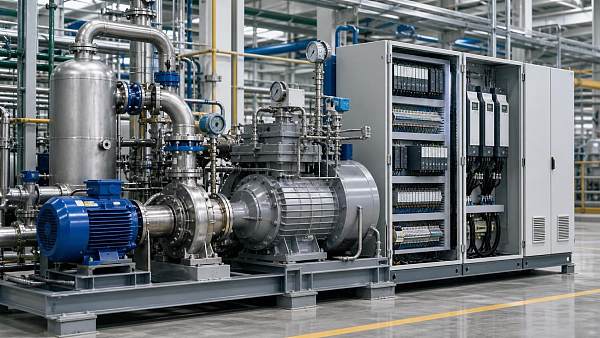
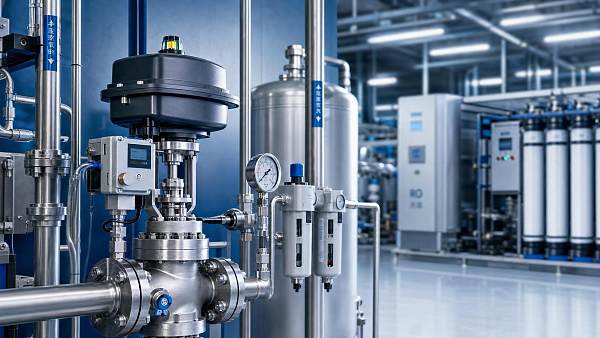
This is especially visible in fluid-intensive facilities: chemical processing, water treatment, power generation, desalination, food and beverage, mining, pulp and paper, and industrial wastewater systems. Pumps create the hydraulic conditions, filters and separators alter fluid quality, compressors supply instrument air, and control valves must respond accurately as those conditions shift. Automation makes those interactions easier to see—and less forgiving of weak valve specifications.
The valve must be specified for control quality, not only for shutoff duty
A common specification mistake is selecting a control valve primarily around maximum capacity. The valve may pass the required flow at full load, but spend most of its operating life near the first few percent of travel. In that region, small position changes can produce disproportionately large flow changes. The loop hunts, the controller keeps correcting, and operators may conclude that the automation system is poorly tuned when the underlying problem is valve sizing or trim selection.
Automated control architectures expose this problem quickly because they record valve position, process variable movement, controller output, and alarm behavior over time. A valve that looks acceptable during commissioning can reveal a poor installed characteristic once production varies, a pump changes speed, a filter loads with solids, or a parallel line comes online.
Specification should therefore begin with the normal operating window, not just design maximum and minimum values. Engineers need credible information on expected flow, upstream and downstream pressures, differential pressure across the valve, fluid properties, and the operating states that occur during startup, cleaning, upset, and reduced throughput. For modulating service, the selected valve and trim should provide controllable authority where the process actually spends time.
This also affects the choice between equal-percentage, linear, or other inherent flow characteristics. There is no universally “smart” trim curve. The right characteristic depends on the process gain, pressure changes across the system, pump curve behavior, and how the valve interacts with other restrictions. A flow-control valve downstream of a variable-speed centrifugal pump may need to be evaluated differently from a pressure-control valve on a compressed-air header or a high-pressure letdown valve in a reverse-osmosis system.
Digital positioners have turned actuator selection into a system decision
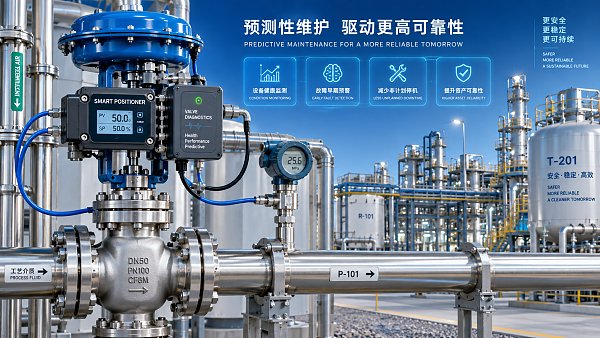
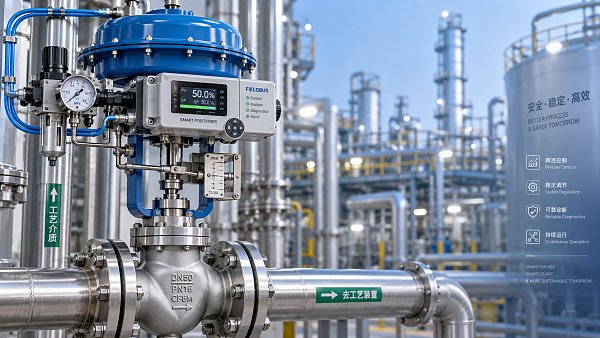
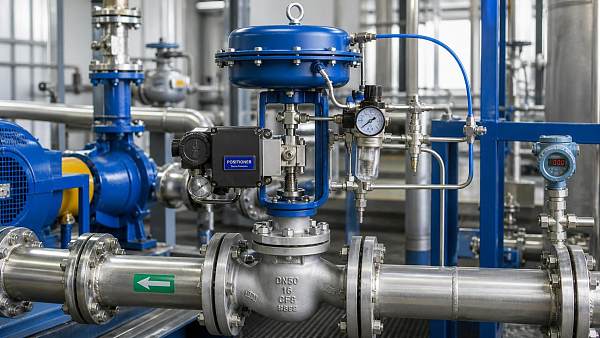
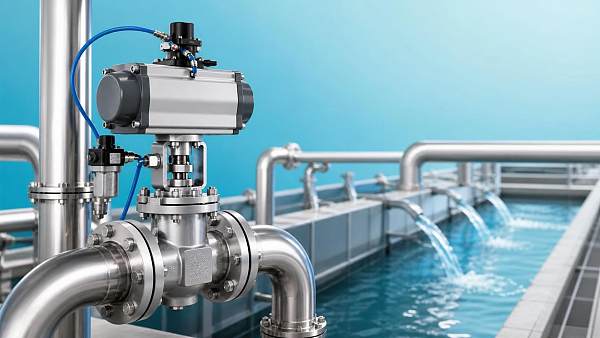
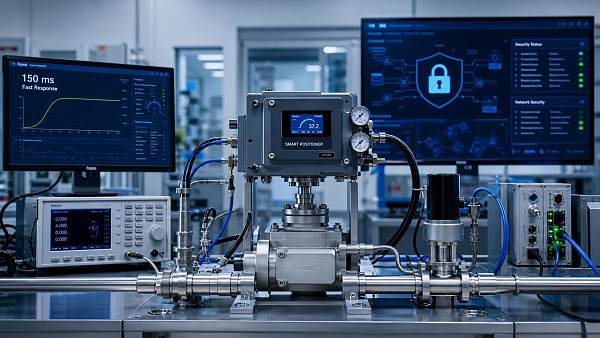
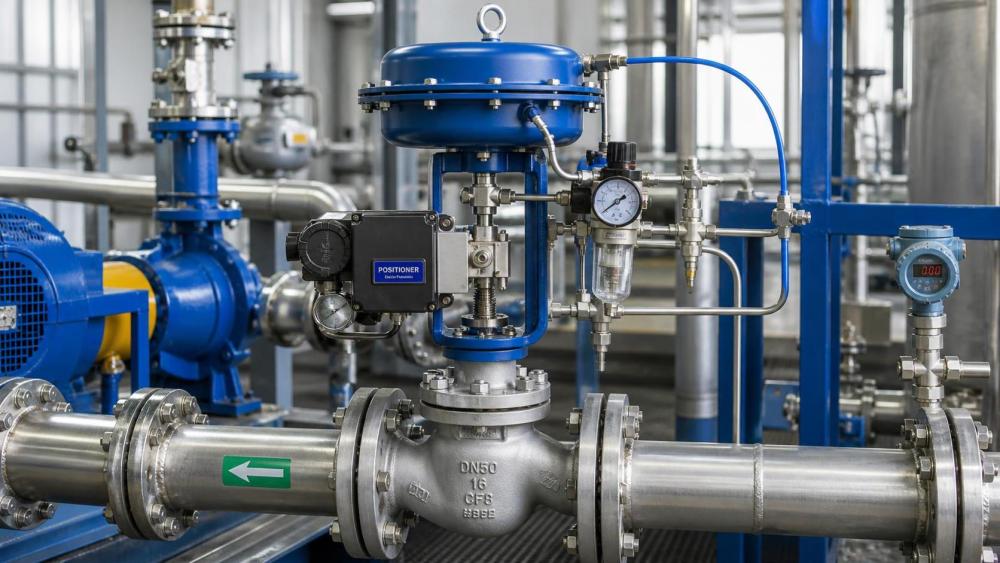
Pneumatic actuators remain widely used because they are robust, fast, and suitable for many hazardous or demanding environments. But automation has changed what buyers expect from the actuator package. A basic actuator with a simple analog signal may be enough for a low-consequence application. A critical throttling valve increasingly needs a smart electro-pneumatic positioner that can accurately translate the control command into repeatable stem or shaft movement while reporting what it sees.
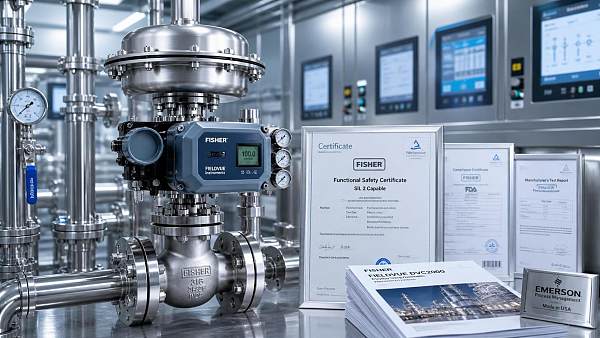
That reporting is valuable only when it is tied to a real maintenance decision. Position deviation, travel accumulation, cycle count, supply-air pressure, friction trends, and repeated failure to reach commanded position can help teams identify developing problems. They may point to packing friction, sticky linkage, inadequate air supply, contaminated instrument air, a worn seat, or an actuator that is undersized for changing differential pressure.
Diagnostics should not be specified as a fashionable add-on. Plants should ask a more practical question: who will review the information, through which platform, and what action will follow? If the site has no asset-management workflow and no reliable way to retrieve digital device data, an expensive diagnostic package can become little more than an unused feature. Conversely, a site already pursuing predictive maintenance may benefit greatly from positioners that support meaningful alerts and safe partial-stroke or performance checks where appropriate.
Communication protocol compatibility now belongs on the valve data sheet
In many plants, the control valve package must fit an existing distributed control system, programmable logic controller environment, remote I/O strategy, and cybersecurity policy. The required signal may still be 4–20 mA, perhaps with a digital overlay, or it may involve a fieldbus or industrial Ethernet architecture. The correct choice is rarely made by the valve vendor alone. It needs agreement between process engineering, instrumentation, controls, operations, and information-security personnel.
The key point is interoperability. A positioner can offer sophisticated communication functions yet provide limited value if the plant cannot commission it, configure it, retain its device files, or interpret its status messages. During project review, clarify the protocol, configuration tools, power requirements, cable practices, remote-access rules, and responsibility for final commissioning. These details can delay startup more readily than a minor change to body material.
For retrofits, the issue is often more complicated. Existing control cabinets may have limited spare capacity, legacy controllers may accept only conventional signals, and field wiring may be old or poorly documented. In those cases, specifying a capable but compatible valve package is usually better than forcing a full digital architecture into one isolated loop.
Automation makes mechanical problems visible, but it does not remove them
A smart positioner cannot solve cavitation, flashing, excessive aerodynamic noise, erosion, corrosion, or poor piping geometry. It can reveal symptoms earlier, but the valve still has to survive the service. This is where automated plants benefit from a more disciplined valve specification process rather than a more electronic one.
Take a high-pressure liquid letdown application. If the pressure drop is large enough to create cavitation, trim geometry, staging, body design, material selection, and downstream piping conditions may all need attention. The same valve may show unstable travel or abnormal noise in its diagnostic record, but those are consequences, not root causes. Similarly, gas or steam service at critical pressure ratios can generate severe noise and vibration. The control strategy may limit rapid movement, yet it cannot substitute for suitable low-noise trim or a properly evaluated pressure-drop arrangement.
Fluid cleanliness matters as well. In industrial filtration, slurry handling, wastewater treatment, or membrane systems, solids can affect seat leakage, trim wear, and actuator reliability. A valve that performs well with clean water may behave very differently with abrasive particles, fibrous solids, crystallizing media, or deposits from changing chemistry. Automation may identify increasing friction or slow response, but maintenance costs are largely determined by the mechanical design chosen at the outset.
Fail-safe action needs to reflect the automated operating philosophy
Fail-open, fail-close, and fail-in-place choices have always been safety decisions. In automated operations, they must also be evaluated alongside shutdown logic, alarm management, bypass arrangements, and loss-of-utility scenarios. A valve that fails closed may protect against overflow but create pump deadhead risk. A valve that fails open may prevent overpressure in one section while allowing uncontrolled discharge elsewhere. There is no substitute for reviewing the complete process consequence.
Instrument air deserves particular attention. Compressed air is often treated as a utility until it becomes the weak link in a valve loop. Pressure instability, water carryover, oil contamination, insufficient capacity during simultaneous demand, or freezing conditions can compromise pneumatic response. As factories add more automated valves, they should assess not just individual actuator consumption but the condition and resilience of the air network serving them.
For critical services, specify what should happen during loss of signal, loss of air, loss of power, and communication failure. These are related but not identical events. The desired response should be documented in the control narrative and verified during functional testing, rather than assumed from the actuator spring arrangement alone.
Lifecycle support is becoming part of technical suitability
Connected valves can remain in service for many years, while control platforms, cybersecurity requirements, and software tools may change faster. That makes supportability a specification issue. Teams should consider the availability of repair kits, trim components, positioner support, configuration backups, documentation, and trained service personnel. A valve package that is easy to purchase but difficult to maintain may become a long-term operational liability.
This is also why it is risky to specify only a brand name or a generic phrase such as “smart valve.” The data sheet should define the process duty, leakage expectation, shutoff requirement, allowable noise or vibration constraints where relevant, actuator action, required diagnostics, communication interface, environmental conditions, and test or documentation expectations. Vendor expertise remains important, but ambiguity should not be handed downstream.
For organizations tracking the wider fluid-control chain, the pattern is clear. Centrifugal pumps, high-pressure plunger pumps, air compressors, filtration equipment, and smart pneumatic control valves increasingly operate as connected assets rather than isolated machines. The useful intelligence lies in the relationships: a changing pump curve affects valve authority; fouling in a separator changes differential pressure; poor compressed-air quality alters actuator behavior; repeated valve hunting may raise energy use across the system.
A practical way to revise a valve specification
Before releasing a valve package for procurement, review it with more than one discipline in the room. Process engineers should confirm operating cases and pressure-drop assumptions. Instrumentation specialists should assess actuator sizing, positioner requirements, fail action, and signal integrity. Control engineers should confirm system compatibility and alarm handling. Maintenance teams should challenge access, spares, air quality, and diagnostic usefulness. Operations personnel often provide the most valuable input of all: how the plant actually starts, stops, bypasses, cleans, and responds when conditions are not ideal.
The answer to “How does industrial automation change valve specification needs?” is not that every valve needs the most advanced electronics available. It is that the valve must now be specified as a controllable, maintainable, and connected part of the process. Put mechanical suitability first, size for real operating behavior, then select automation features that the plant can genuinely commission and use. That sequence prevents a great deal of expensive sophistication from being installed on the wrong valve.
Related News
 How fluid control digitalization improves valve maintenance planningProcess Control ArchitectFluid control digitalization helps teams prioritize valve maintenance, reduce unplanned downtime, and improve reliability with actionable condition data.
 How smart valve positioners improve process control valve accuracyProcess Control ArchitectDiscover how smart positioners improve process control valve accuracy, reduce friction-related errors, enhance stability, and enable predictive maintenance.
 How to evaluate a valve automation supplier before placing an orderProcess Control ArchitectChoose a valve automation supplier with confidence. Learn how to assess engineering capability, compatibility, testing, lead times, and lifecycle support before ordering.
 How Does Industrial Automation Change Valve Specification Requirements?Process Control ArchitectHow does industrial automation change valve specification needs? Discover smarter sizing, diagnostics, protocols, fail-safe design, and lifecycle strategies for reliable control.
 Retrofit vs replacement automation: which option minimizes downtime?Process Control ArchitectRetrofit vs replacement automation: compare downtime, integration risk, lifecycle costs, and phased execution to protect uptime and modernize with confidence.
 When smart pneumatic control valves improve water treatment stabilityProcess Control ArchitectSmart pneumatic control valves for water treatment improve flow precision, dosing consistency, diagnostics, and plant stability. Learn how to select the right solution.
 When predictive maintenance for process valves pays off in plant operationsProcess Control ArchitectPredictive maintenance for process valves can cut downtime, reduce energy loss, and boost reliability. Learn when it pays off in plant operations—and how to justify the investment.
 Revised EN 14382:2026 Adds EMC Immunity Test for Smart Valve Positioners in EU ExportsProcess Control ArchitectEN 14382:2026 now mandates EMC immunity testing for Smart Valve Positioners, reshaping EU export compliance for valve OEMs and integrators. Learn what changed and how to prepare.
 FDA Tightens Import Rules for Smart Valve PositionersProcess Control ArchitectSmart valve positioners now face stricter FDA import rules. Learn how IEC 61508 SIL2 or UL 61508 documentation affects U.S. clearance, suppliers, and compliance planning.
 EN 14382:2026 Raises EU Entry Bar for Smart PositionersProcess Control ArchitectEN 14382:2026 raises the EU entry bar for Smart Valve Positioners with a 150 ms step response cap and IEC 62443-4-2 cybersecurity checks. Learn what exporters, buyers, and compliance teams must do before Nov 1, 2026.
 High-Precision Stainless Steel Control Valves for Corrosive Process LinesProcess Control ArchitectHigh-precision control valves stainless steel solutions improve corrosion resistance, flow stability, and safety in demanding process lines. Discover how to reduce downtime and boost control accuracy.
 How a Valve Performance Consultant Improves Uptime and Control AccuracyProcess Control ArchitectValve performance consultant insights to improve uptime, control accuracy, and energy efficiency. Learn how targeted diagnostics solve hidden valve issues across process systems.