Retrofit vs replacement automation: which option minimizes downtime?




For project managers, the retrofit vs replacement automation decision is rarely about technology alone. It determines shutdown duration, commissioning risk, operating continuity, and future maintenance exposure.
Retrofit automation usually minimizes immediate downtime when mechanical assets remain sound, interfaces are understood, and controls can be migrated in planned phases without destabilizing production.
Replacement can minimize total disruption when obsolete equipment creates repeated failures, undocumented logic, unavailable spares, or integration limits that turn every temporary repair into another outage.
The practical question is not whether retrofit costs less than replacement. It is which route produces the lowest operational risk across shutdown, startup, reliability, cybersecurity, and lifecycle performance.
For pumps, compressors, control valves, and separation systems, project leaders need a structured comparison instead of relying on equipment age or capital budget alone.
This guide explains how to evaluate retrofit vs replacement automation, identify downtime drivers, calculate transition risk, and select an implementation path that protects process availability.
Start With the Downtime Question, Not the Equipment Age
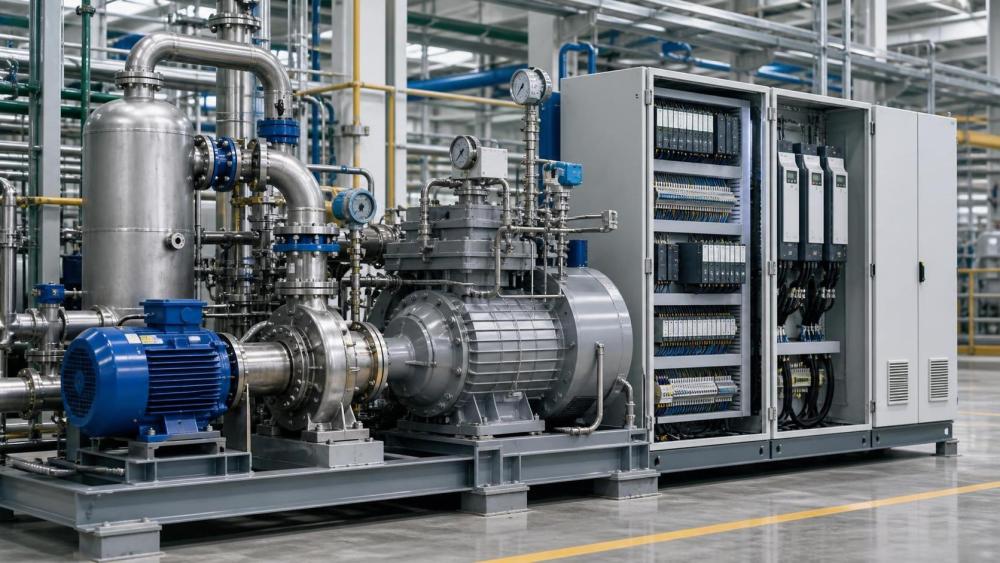
A twenty-year-old pump train may be an excellent retrofit candidate if its hydraulics, bearings, motor condition, and process duty remain reliable under current operating requirements.
Conversely, a relatively new compressor package may justify replacement when proprietary controls, failed sensors, unsupported firmware, or poor sequencing logic create persistent production interruptions.
Project teams should separate mechanical health from automation health. A weak control system does not automatically mean the entire asset requires mechanical replacement.
The core search intent behind retrofit vs replacement automation is usually practical: how can a facility upgrade controls without losing output for longer than necessary?
Project managers typically need answers about shutdown windows, commissioning duration, tie-in complexity, production losses, contractor coordination, and the likelihood of post-startup instability.
They also need to understand whether a short planned outage could prevent a longer series of unplanned outages caused by aging components and unsupported controls.
A useful first principle is simple: retrofit minimizes downtime when the existing physical platform can safely support the required automation, capacity, efficiency, and compliance targets.
Assess Whether the Existing Asset Is a Stable Retrofit Platform
Before selecting a controls retrofit, inspect the asset as an operating system rather than a collection of components. Mechanical weaknesses can undermine an otherwise successful automation project.
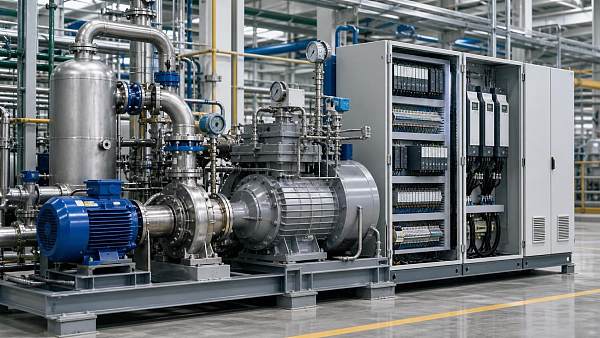
For centrifugal pumps, review vibration history, seal failures, bearing condition, cavitation evidence, hydraulic performance, motor insulation, baseplate alignment, and availability of critical spares.
For air compressor systems, examine air-end condition, cooling performance, oil management, motor loading, dryer interaction, pressure stability, and actual demand profiles across operating shifts.
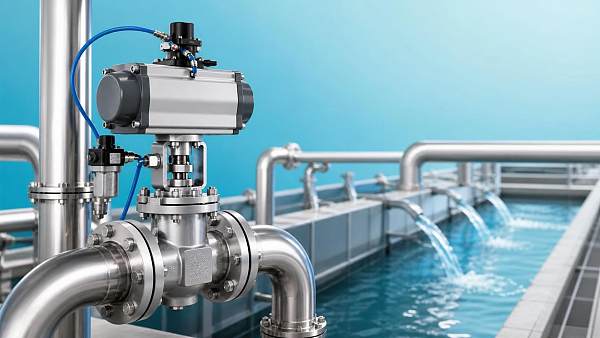
For control valves, assess actuator health, valve travel, stem friction, packing leakage, trim erosion, air supply quality, and whether the valve remains correctly sized.
For filtration and separation equipment, determine whether automation limitations are masking physical problems such as membrane fouling, poor backwash performance, damaged media, or inadequate instrumentation.
A retrofit is strongest when mechanical reliability is predictable, process duty is stable, and the main performance gap comes from legacy PLCs, analog instrumentation, or isolated control architecture.
Replacement becomes more defensible when recurring mechanical defects, structural corrosion, inadequate capacity, obsolete motors, or unsafe operating margins would remain after the controls upgrade.
Map the Real Sources of Shutdown Time
Many project plans underestimate downtime because they count installation hours but ignore engineering validation, panel preparation, cable tracing, loop checks, startup tuning, and operator acceptance.
Retrofit projects often shorten field downtime by completing engineering, software development, factory acceptance testing, and panel fabrication before the planned shutdown begins.
Replacement projects can also reduce outage exposure when major skids are built, tested, wired, and functionally verified offsite before arriving at the facility.
The difference lies in field uncertainty. Existing installations may contain undocumented wiring, changed piping, obsolete interlocks, inaccessible junction boxes, and control logic known only to experienced operators.
Replacement introduces different risks, including foundation modifications, piping reroutes, electrical upgrades, lifting constraints, utility connections, and process requalification after equipment changeover.
Create a shutdown work-breakdown structure that includes isolation, demolition, installation, wiring, testing, commissioning, performance verification, and contingency recovery for every critical path activity.
Then assign realistic durations based on site conditions, not vendor estimates alone. The option with fewer unknowns usually provides the more reliable downtime forecast.
Compare Retrofit and Replacement by Integration Complexity
Integration complexity is often the decisive factor in automation projects because process equipment must communicate reliably with control systems, safety systems, historians, maintenance platforms, and remote monitoring tools.
A retrofit can preserve proven mechanical interfaces while replacing legacy PLCs, variable frequency drives, smart positioners, sensors, network switches, and supervisory control software.
This approach works particularly well when pipework, motor starters, process sequences, and protective interlocks are documented and remain compatible with current operating standards.
However, retrofitting several generations of equipment can create hybrid architecture, mixed protocols, inconsistent alarm philosophies, and difficult troubleshooting unless the design includes clear standardization.
Replacement gives the project team an opportunity to establish consistent instrumentation, modern communication protocols, standardized alarms, cybersecurity controls, and common spare parts across the asset fleet.
It also creates a cleaner digital foundation for predictive maintenance, energy monitoring, remote diagnostics, and performance benchmarking across pumps, compressors, valves, and separation equipment.
Choose replacement when integration requires extensive workaround logic or unsupported gateways. Choose retrofit when modernization can use defined interfaces without compromising maintainability or safety.
Protect Cybersecurity and Functional Safety During Modernization
Automation modernization can introduce operational risk if networked devices are added without proper segmentation, access control, backup procedures, patch management, and recovery testing.
Legacy systems sometimes remain isolated by design, but isolation is not a sufficient cybersecurity strategy when remote support, cloud analytics, or plant-wide data collection are introduced.
A retrofit must identify every new connection between programmable controllers, drives, smart valve positioners, compressor controllers, engineering workstations, and enterprise networks.
Replacement may simplify cybersecurity because it allows a single validated architecture. Yet it requires careful testing so new protective functions behave correctly under actual process conditions.
Functional safety deserves equal attention. Emergency shutdown logic, permissives, trips, proof-testing requirements, and bypass controls must be documented before any migration begins.
Do not assume existing logic is correct because it has operated for years. Legacy programs may contain undocumented overrides, obsolete thresholds, and unsafe assumptions created during previous modifications.
A successful project uses cause-and-effect matrices, independent reviews, simulation where practical, and formal startup checklists to verify both normal automation and abnormal operating responses.
Evaluate Energy, Capacity, and Decarbonization Benefits
Downtime should not be evaluated separately from lifecycle value. A brief, well-managed replacement outage may be justified when the new system materially improves energy efficiency and production capability.
For pumping systems, variable speed control can reduce throttling losses, improve pressure stability, and limit unnecessary recirculation when demand changes throughout the operating cycle.
For compressors, modern sequencing, leak detection data, pressure optimization, and high-efficiency drives can lower compressed-air energy use while improving system resilience.
Smart control valves can improve process stability through better position feedback, diagnostics, friction monitoring, and tuning, but only when valve sizing and trim selection are suitable.
In filtration systems, upgraded automation can optimize backwash cycles, chemical dosing, membrane cleaning, and differential-pressure management, extending useful life while reducing utility consumption.
Replacement is usually the stronger choice when existing motors, air ends, impellers, valve bodies, or separation modules impose hard efficiency limits that controls alone cannot overcome.
Use measured baseline data rather than nameplate assumptions. Energy savings, avoided maintenance, production gains, and reduced emissions should be quantified before comparing project alternatives.
Build a Decision Model That Project Sponsors Can Approve
Project sponsors need a decision model that combines capital cost with downtime exposure, production loss, safety risk, maintenance burden, energy performance, and expected asset life.
Start by estimating the cost of one hour of lost production, including missed output, utility waste, downstream disruption, overtime, customer commitments, and restart losses.
Next, estimate planned outage duration for both options and apply a contingency factor based on site uncertainty, documentation quality, contractor experience, and equipment condition.
Include the probability and expected impact of unplanned outages after implementation. The cheapest project can become the most expensive when it preserves repeated reliability failures.
Evaluate retrofit costs beyond hardware. Engineering surveys, cable remediation, custom interfaces, software migration, panel modifications, temporary controls, and commissioning support can become significant.
Evaluate replacement costs beyond purchase price. Civil work, piping changes, electrical capacity, operator training, spare inventory, disposal, qualification, and production ramp-up all affect the result.
A weighted scorecard helps teams avoid subjective debates. Assign transparent scoring to downtime, lifecycle cost, reliability, energy, scalability, safety, and implementation confidence.
Use Phased Execution to Reduce the Risk of Either Choice
Neither retrofit nor replacement needs to be a single high-risk shutdown event. Phased execution can reduce operational exposure and improve learning before final cutover.
For a retrofit, complete asset surveys, I/O validation, logic documentation, panel construction, software testing, and operator simulation before disconnecting the existing control system.
Maintain a rollback plan during cutover. Critical facilities should define how they will restore the previous controls or transition to safe manual operation if startup problems occur.
For replacement, consider parallel installation of the new skid, controller, or auxiliary system while the existing equipment continues operating within its normal duty envelope.
Commission subsystems early where possible, including network communications, historian connections, drive configuration, instrumentation calibration, and remote diagnostics before process handover.
Schedule cutover around real process constraints, such as maintenance turnarounds, low-demand periods, feedstock availability, seasonal operating patterns, and downstream inventory capacity.
Operators should participate throughout design and testing. Their knowledge of abnormal conditions, startup behavior, and practical workarounds often identifies risks absent from drawings and specifications.
Choose the Option That Minimizes Total Operational Disruption
Retrofit automation is usually the preferred path when core equipment is mechanically reliable, process requirements remain stable, and modernization can be delivered through tested, well-documented interfaces.
It can preserve proven assets, shorten field work, improve visibility, and add modern diagnostics without forcing extensive piping, civil, electrical, or process changes.
Replacement automation is usually justified when physical deterioration, unsupported systems, persistent failures, efficiency limits, capacity gaps, or unsafe architecture would remain after a retrofit.
The best choice is therefore not determined by age, initial cost, or technology preference. It depends on which option produces the lowest credible lifecycle interruption.
For project managers, the retrofit vs replacement automation decision should end with a documented shutdown plan, quantified risk register, tested commissioning strategy, and measurable business case.
When those elements are in place, modernization becomes a controlled operational investment rather than an uncertain maintenance event with unpredictable consequences.
Related News
 How fluid control digitalization improves valve maintenance planningProcess Control ArchitectFluid control digitalization helps teams prioritize valve maintenance, reduce unplanned downtime, and improve reliability with actionable condition data.
 How smart valve positioners improve process control valve accuracyProcess Control ArchitectDiscover how smart positioners improve process control valve accuracy, reduce friction-related errors, enhance stability, and enable predictive maintenance.
 How to evaluate a valve automation supplier before placing an orderProcess Control ArchitectChoose a valve automation supplier with confidence. Learn how to assess engineering capability, compatibility, testing, lead times, and lifecycle support before ordering.
 How Does Industrial Automation Change Valve Specification Requirements?Process Control ArchitectHow does industrial automation change valve specification needs? Discover smarter sizing, diagnostics, protocols, fail-safe design, and lifecycle strategies for reliable control.
 Retrofit vs replacement automation: which option minimizes downtime?Process Control ArchitectRetrofit vs replacement automation: compare downtime, integration risk, lifecycle costs, and phased execution to protect uptime and modernize with confidence.
 When smart pneumatic control valves improve water treatment stabilityProcess Control ArchitectSmart pneumatic control valves for water treatment improve flow precision, dosing consistency, diagnostics, and plant stability. Learn how to select the right solution.
 When predictive maintenance for process valves pays off in plant operationsProcess Control ArchitectPredictive maintenance for process valves can cut downtime, reduce energy loss, and boost reliability. Learn when it pays off in plant operations—and how to justify the investment.
 Revised EN 14382:2026 Adds EMC Immunity Test for Smart Valve Positioners in EU ExportsProcess Control ArchitectEN 14382:2026 now mandates EMC immunity testing for Smart Valve Positioners, reshaping EU export compliance for valve OEMs and integrators. Learn what changed and how to prepare.
 FDA Tightens Import Rules for Smart Valve PositionersProcess Control ArchitectSmart valve positioners now face stricter FDA import rules. Learn how IEC 61508 SIL2 or UL 61508 documentation affects U.S. clearance, suppliers, and compliance planning.
 EN 14382:2026 Raises EU Entry Bar for Smart PositionersProcess Control ArchitectEN 14382:2026 raises the EU entry bar for Smart Valve Positioners with a 150 ms step response cap and IEC 62443-4-2 cybersecurity checks. Learn what exporters, buyers, and compliance teams must do before Nov 1, 2026.
 High-Precision Stainless Steel Control Valves for Corrosive Process LinesProcess Control ArchitectHigh-precision control valves stainless steel solutions improve corrosion resistance, flow stability, and safety in demanding process lines. Discover how to reduce downtime and boost control accuracy.
 How a Valve Performance Consultant Improves Uptime and Control AccuracyProcess Control ArchitectValve performance consultant insights to improve uptime, control accuracy, and energy efficiency. Learn how targeted diagnostics solve hidden valve issues across process systems.