Industrial automation solutions that improve output without rewiring




For decision-makers under pressure to raise throughput, cut downtime, and control capital costs, industrial automation solutions offer a faster path to measurable gains than full system replacement. From smart valve control and compressor optimization to pump monitoring and predictive maintenance, modern upgrades can improve output, efficiency, and reliability without costly rewiring or prolonged disruption.
What decision-makers are really looking for when they search for industrial automation solutions
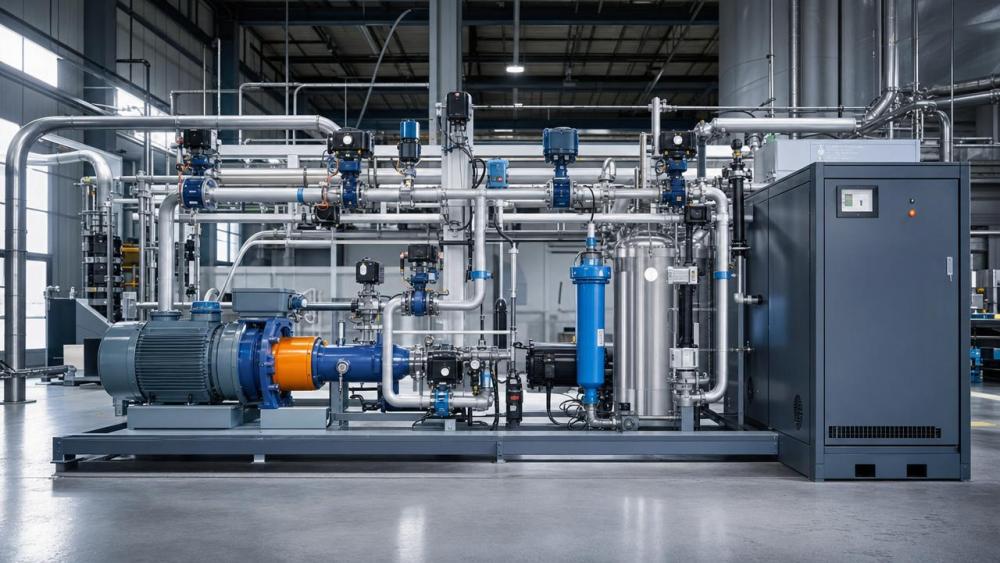
When business leaders search for industrial automation solutions that improve output without rewiring, they are rarely looking for abstract definitions. They want to know whether meaningful production gains are possible inside an existing plant, with limited shutdowns, controlled capital spending, and low implementation risk.
The core search intent is practical and commercial: how to increase throughput, stabilize operations, reduce maintenance losses, and improve energy performance without opening walls, replacing entire control architectures, or launching a disruptive greenfield-style project. In many facilities, wiring changes are not just expensive. They also trigger downtime, compliance reviews, retesting, and coordination across operations, maintenance, engineering, and procurement.
For enterprise decision-makers, the real question is simple: can targeted automation upgrades deliver a measurable return faster than a full modernization program? In many cases, the answer is yes. The strongest results often come from instrumenting critical assets, adding smarter control layers, digitizing condition monitoring, and improving visibility at process bottlenecks rather than rebuilding the plant from scratch.
This matters especially in fluid-intensive industries, where pumps, control valves, compressors, and separation systems directly shape production continuity, energy intensity, product quality, and maintenance exposure. If these assets become more responsive, more visible, and easier to optimize, output can rise even when the physical piping and electrical backbone remain largely unchanged.
Why “without rewiring” has become a strategic requirement
For many plants, rewiring is no longer viewed as a neutral engineering task. It is a business risk. Legacy facilities often run near capacity, have tight delivery commitments, and cannot tolerate extended installation windows. Even a technically sound rewiring project may create hidden costs through shutdown planning, retesting, contractor coordination, permit controls, and delayed production recovery.
That is why non-invasive or low-disruption automation has become attractive. Wireless sensors, edge gateways, smart positioners, retrofit variable frequency drives, and software-based analytics make it possible to improve process control without replacing every cable or cabinet. These approaches do not eliminate engineering rigor, but they reduce the physical burden of implementation.
For decision-makers, this changes the investment logic. Instead of waiting for a major capital event, companies can pursue phased modernization. They can target one compressor room, one pump train, one valve-intensive process loop, or one filtration line. The result is lower upfront commitment, faster evidence of value, and a clearer basis for scaling successful changes across the site or network.
In volatile markets, flexibility matters. Plants need upgrades that can support immediate performance targets while preserving future options. Industrial automation solutions that fit around existing infrastructure offer exactly that: improvement now, with less disruption, and a cleaner pathway toward broader digital transformation later.
Where output gains usually come from in existing industrial systems
Many executives assume output improvements require adding equipment capacity. In practice, plants often lose output through instability, unplanned downtime, slow manual adjustments, conservative operating windows, and poor coordination between assets. Automation solves these losses by making the process more visible, more predictable, and more controllable.
One major source of lost output is process variability. When flow, pressure, temperature, or air supply drifts beyond ideal ranges, operators compensate manually or run with extra safety margins. That protects the process, but it often reduces throughput. Smarter control loops and better instrumentation can shrink this variability, allowing production to move closer to design conditions with greater confidence.
Another source is hidden equipment degradation. A pump may still run while cavitation develops. A control valve may still cycle while position accuracy declines. A compressor may still supply air while leakage, heat, or load imbalance quietly reduce system performance. Without automated monitoring, these issues are found too late, usually after output, efficiency, or reliability has already been affected.
Then there is decision latency. In plants that still rely on fragmented data and manual inspections, teams often react after problems become visible at the production level. Industrial automation solutions reduce this lag by collecting operational data continuously and presenting it in a form that supports faster maintenance and operating decisions.
The result is not always a dramatic single leap in production. More often, it is the accumulation of several smaller wins: fewer stoppages, better setpoint control, shorter recovery time after disturbances, lower energy waste, improved asset availability, and reduced quality variation. Combined, these improvements can materially increase output without expanding physical infrastructure.
High-impact upgrade areas for pumps, valves, compressors, and separation systems
For organizations operating fluid and gas systems, the best automation opportunities are usually found in the assets that most directly influence process continuity. These systems already sit at the center of production performance, so even modest optimization can create outsized operational value.
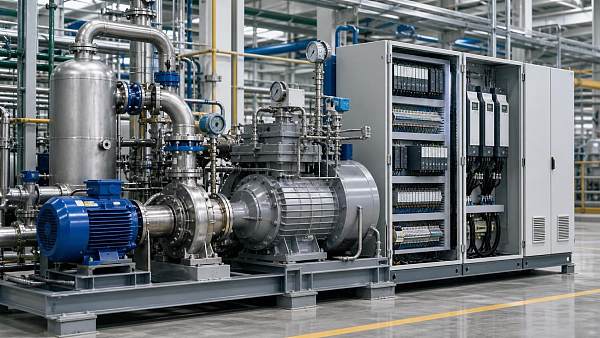
In pump systems, retrofit monitoring is often the logical starting point. Adding vibration, temperature, pressure, flow, and power monitoring can reveal inefficient operating zones, seal stress, bearing wear, and early cavitation patterns. Once these signals are visible, teams can adjust controls, revise maintenance schedules, and prevent failures that would otherwise interrupt production.
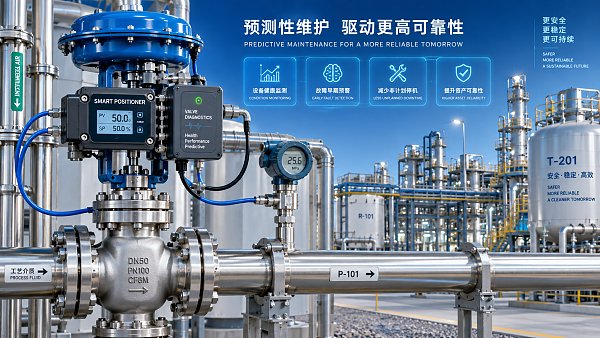
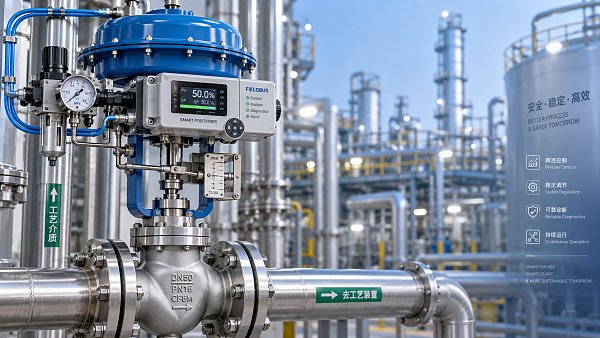
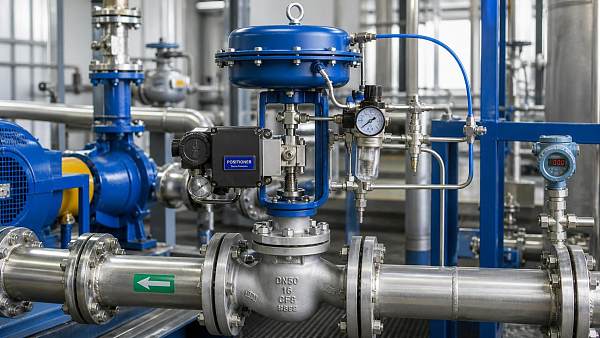
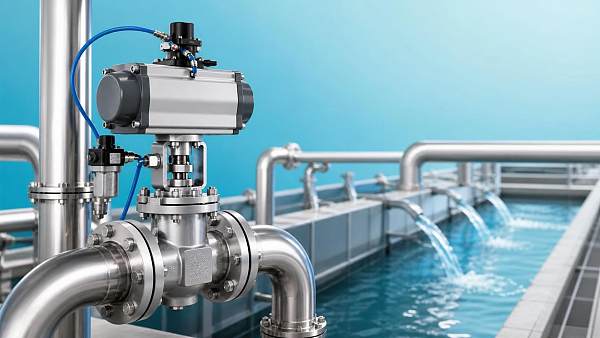
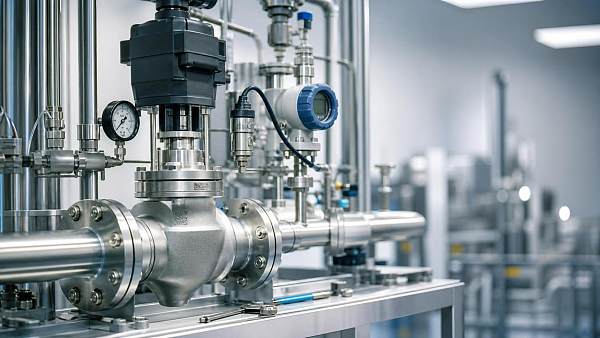
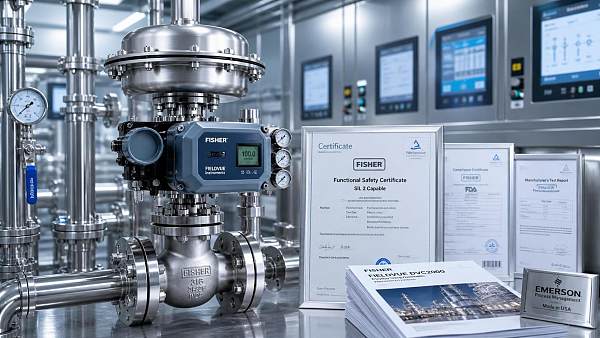
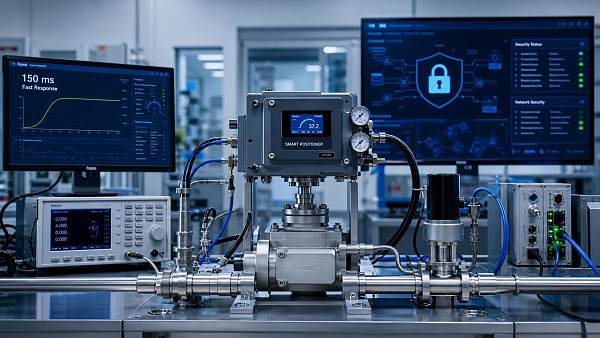
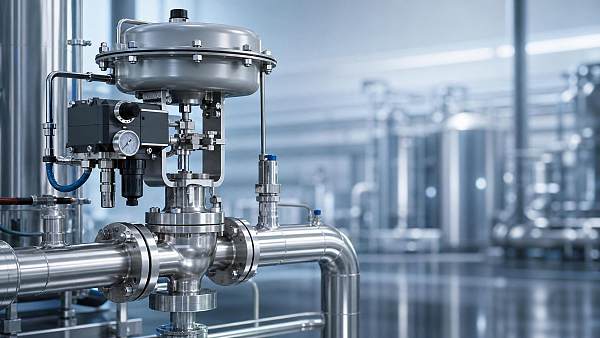
Smart pneumatic control valves are another high-value target. Legacy valves may still function mechanically but perform poorly in dynamic control. Upgrading to intelligent electro-pneumatic positioners can improve response speed, positioning accuracy, diagnostics, and remote visibility. That can tighten process control, reduce oscillation, and improve consistency in harsh, high-temperature, or corrosive environments.
Compressed air systems frequently offer some of the fastest returns. Many factories treat compressed air as a utility rather than a controllable production resource. Yet unstable pressure, leakage, poor sequencing, and inefficient load sharing can directly affect automation reliability and line speed. Adding variable speed control, flow monitoring, leak analytics, and smarter compressor sequencing can improve both output support and energy efficiency.
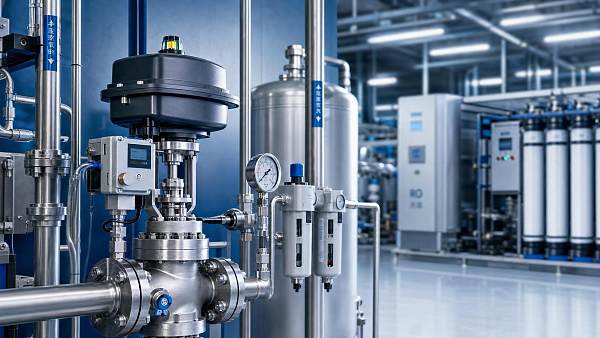
In filtration and separation processes, automation helps by stabilizing quality and reducing interruptions. Differential pressure monitoring, membrane performance tracking, automated backwash logic, and predictive cleaning schedules can extend run time and protect downstream operations. For facilities pursuing water reuse, ZLD, or stricter compliance targets, these controls become even more valuable.
The common theme is that effective industrial automation solutions do not need to start with complete system replacement. They start by identifying assets where data visibility and control precision are weakest relative to business impact.
How to evaluate business value before approving a project
Senior decision-makers do not need more technical promises. They need a disciplined method for evaluating whether a proposed upgrade will create measurable financial and operational value. The most useful approach is to assess automation opportunities through five lenses: throughput, downtime, energy, maintenance, and implementation risk.
First, estimate throughput impact. Ask whether the upgrade will remove a known bottleneck, reduce variability, or shorten recovery from process disturbances. If a control improvement can safely raise average operating rate or reduce micro-stoppages, its production value may exceed the direct maintenance benefit.
Second, quantify downtime exposure. Identify which assets generate the highest cost when they fail or drift out of specification. In many plants, one unstable pump station, one unreliable compressor train, or one problematic control valve cluster can trigger costly interruptions across multiple lines. Automation that reduces these vulnerabilities deserves priority.
Third, include energy performance. In fluid machinery, energy is often one of the largest lifecycle costs. Smarter control of pumps, valves, and compressors can reduce wasted head, throttling losses, pressure oversupply, and off-design operation. Even if output gains are modest, energy savings can strengthen the business case significantly.
Fourth, review maintenance economics. Predictive monitoring does not eliminate maintenance, but it can improve timing, reduce emergency interventions, and lower secondary damage. When teams move from reactive repair to condition-based action, spare parts planning and labor utilization usually improve as well.
Fifth, consider execution risk. A lower-cost project with minimal shutdown needs may create a stronger real-world return than a technically superior project that is difficult to install. For this reason, “without rewiring” is not just an engineering preference. It is part of the financial case.
Boards and plant leaders should also ask vendors and internal teams for proof pathways. What will be measured before implementation? What baseline will be used? How soon will results be visible? The best automation projects are not approved on optimism. They are approved on a credible measurement framework.
Common concerns that slow adoption, and how strong teams address them
Even when the value proposition is clear, projects often stall because decision-makers see hidden complexity. Typical concerns include cybersecurity, integration difficulty, data reliability, workforce adoption, and uncertainty about actual return. These are valid concerns, but they can be managed if addressed early.
Cybersecurity should be treated as a design requirement, not an afterthought. Plants adopting new sensors, gateways, and remote visibility tools need network segmentation, access controls, update governance, and vendor accountability. A well-scoped retrofit does not need to create uncontrolled digital exposure.
Integration risk is another common fear, especially in facilities with mixed legacy systems. Here, the answer is phased architecture. Rather than forcing immediate enterprise-wide integration, many successful teams start with local monitoring, edge analytics, or limited interoperability around a defined use case. Once value is proven, they expand connectivity more confidently.
Data quality matters just as much as data quantity. Installing sensors everywhere does not help if measurements are inconsistent or poorly contextualized. Effective industrial automation solutions focus on critical variables, clear thresholds, and actionable dashboards tied to operating decisions. Decision-makers should be wary of projects that emphasize volume of data more than operational usefulness.
Workforce adoption can also make or break outcomes. If operators and maintenance teams see new automation as a reporting burden or a threat to established routines, benefits may never materialize. Strong projects involve frontline users early, translate insights into practical workflows, and ensure that alerts, recommendations, and diagnostics are relevant to daily work.
Finally, return uncertainty should be reduced through pilots. A pilot does not need to be small in ambition, but it should be narrow in scope and measurable in design. One pump system, one compressor area, or one problematic control loop can provide enough evidence to support broader rollout decisions.
What a practical implementation roadmap looks like
Decision-makers often ask where to begin. The most effective roadmap is usually not technology-first. It is constraint-first. Start by identifying where output is being limited today: unstable flow control, compressor pressure dips, repeated pump failures, excessive manual intervention, or inconsistent separation performance.
Next, rank candidate areas by business impact and ease of implementation. The ideal first project has three traits: a visible operational problem, a measurable performance baseline, and a solution that can be deployed with limited disruption. This helps the organization build confidence quickly.
Then define the minimum viable automation layer. That may include smart sensors, intelligent valve positioners, retrofit drive control, wireless condition monitoring, edge data collection, and alarm logic linked to maintenance actions. The goal is not to automate everything at once. The goal is to automate what improves decisions and control at the bottleneck.
After deployment, measure outcomes rigorously. Compare pre- and post-implementation data on throughput, downtime events, energy use, maintenance calls, and process stability. Where possible, isolate the effect of the upgrade from unrelated production fluctuations. This is essential for scaling investment credibly.
Finally, standardize what works. If one compressor optimization project reduces pressure instability and energy waste, replicate the architecture. If one smart valve upgrade cuts process variability, establish it as a preferred retrofit model. Scalable improvement comes from repeatable design, not one-off experimentation.
Why this matters now for competitive and operational resilience
Industrial producers are under pressure from every direction: tighter margins, energy volatility, aging infrastructure, stricter environmental expectations, and growing demand for reliability. In that context, waiting for a full plant rebuild is rarely the most practical strategy. Incremental but intelligent modernization can deliver value sooner and with less exposure.
This is especially relevant in sectors that depend heavily on fluid control and system machinery. Pumps, valves, compressors, and separation equipment are not background utilities. They are production enablers. When they are digitized, monitored, and controlled more effectively, the entire plant becomes more resilient.
For executive teams, the strategic lesson is clear. The right industrial automation solutions do more than automate tasks. They improve operational clarity, reduce avoidable losses, and turn existing assets into more productive infrastructure. In uncertain markets, that kind of performance gain is more than an efficiency project. It is a competitive advantage.
Conclusion: better output does not always require bigger disruption
The strongest automation investments are not necessarily the largest or most complex. They are the ones that solve expensive operational problems with measurable speed and manageable risk. For many facilities, that means focusing on upgrades that improve output without rewiring the entire plant.
When smart monitoring, intelligent control, and predictive maintenance are applied to high-impact systems such as pumps, control valves, compressors, and separation equipment, companies can unlock real gains in throughput, uptime, and efficiency. Just as importantly, they can do so while preserving capital discipline and minimizing operational disruption.
For decision-makers evaluating next steps, the practical path is to begin with bottlenecks, prioritize high-value assets, demand measurable business cases, and scale proven results. In today’s industrial environment, modernization does not have to start with demolition. Often, it starts with better control of what you already have.
Related News
 How fluid control digitalization improves valve maintenance planningProcess Control ArchitectFluid control digitalization helps teams prioritize valve maintenance, reduce unplanned downtime, and improve reliability with actionable condition data.
 How smart valve positioners improve process control valve accuracyProcess Control ArchitectDiscover how smart positioners improve process control valve accuracy, reduce friction-related errors, enhance stability, and enable predictive maintenance.
 How to evaluate a valve automation supplier before placing an orderProcess Control ArchitectChoose a valve automation supplier with confidence. Learn how to assess engineering capability, compatibility, testing, lead times, and lifecycle support before ordering.
 How Does Industrial Automation Change Valve Specification Requirements?Process Control ArchitectHow does industrial automation change valve specification needs? Discover smarter sizing, diagnostics, protocols, fail-safe design, and lifecycle strategies for reliable control.
 Retrofit vs replacement automation: which option minimizes downtime?Process Control ArchitectRetrofit vs replacement automation: compare downtime, integration risk, lifecycle costs, and phased execution to protect uptime and modernize with confidence.
 When smart pneumatic control valves improve water treatment stabilityProcess Control ArchitectSmart pneumatic control valves for water treatment improve flow precision, dosing consistency, diagnostics, and plant stability. Learn how to select the right solution.
 When predictive maintenance for process valves pays off in plant operationsProcess Control ArchitectPredictive maintenance for process valves can cut downtime, reduce energy loss, and boost reliability. Learn when it pays off in plant operations—and how to justify the investment.
 Revised EN 14382:2026 Adds EMC Immunity Test for Smart Valve Positioners in EU ExportsProcess Control ArchitectEN 14382:2026 now mandates EMC immunity testing for Smart Valve Positioners, reshaping EU export compliance for valve OEMs and integrators. Learn what changed and how to prepare.
 FDA Tightens Import Rules for Smart Valve PositionersProcess Control ArchitectSmart valve positioners now face stricter FDA import rules. Learn how IEC 61508 SIL2 or UL 61508 documentation affects U.S. clearance, suppliers, and compliance planning.
 EN 14382:2026 Raises EU Entry Bar for Smart PositionersProcess Control ArchitectEN 14382:2026 raises the EU entry bar for Smart Valve Positioners with a 150 ms step response cap and IEC 62443-4-2 cybersecurity checks. Learn what exporters, buyers, and compliance teams must do before Nov 1, 2026.
 High-Precision Stainless Steel Control Valves for Corrosive Process LinesProcess Control ArchitectHigh-precision control valves stainless steel solutions improve corrosion resistance, flow stability, and safety in demanding process lines. Discover how to reduce downtime and boost control accuracy.
 How a Valve Performance Consultant Improves Uptime and Control AccuracyProcess Control ArchitectValve performance consultant insights to improve uptime, control accuracy, and energy efficiency. Learn how targeted diagnostics solve hidden valve issues across process systems.