Process Control Innovation Trends in Smart Valve Positioners




Process control innovation is changing smart valve positioners from basic final control accessories into connected, diagnosable, and performance-critical assets across the broader industrial landscape. In process plants, utilities, water systems, compressed air networks, chemical lines, and filtration skids, the quality of valve positioning now directly affects stability, safety, energy use, and maintenance planning. As digitalization and decarbonization targets accelerate, understanding where smart positioners create the most value helps align control performance with operational resilience.
Where process control innovation matters most across operating scenarios
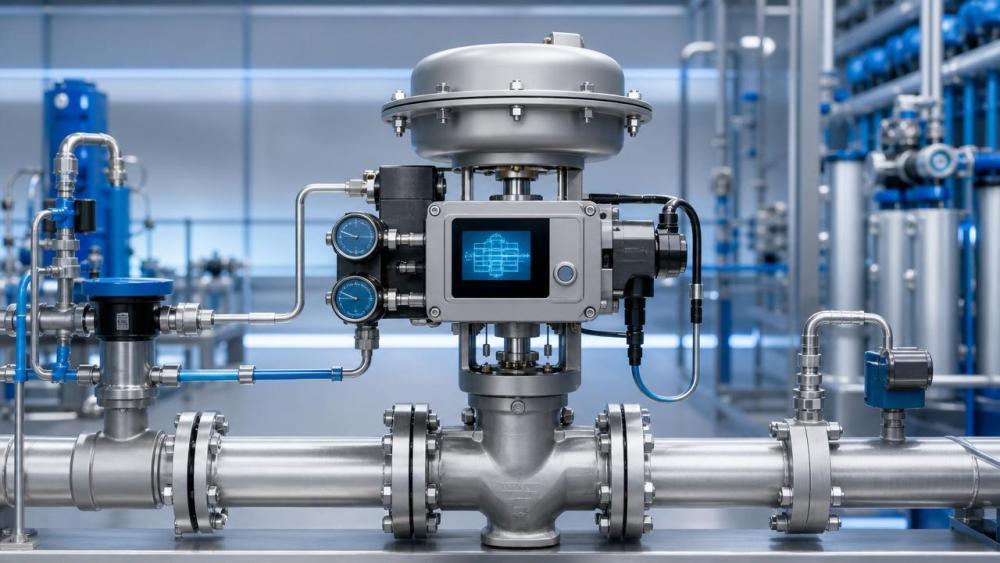
The impact of process control innovation is not identical in every application. A corrosive chemical dosing line values diagnostics and trim stability differently from a high-cycle compressor bypass loop or a wastewater aeration header. Smart valve positioners must therefore be evaluated in context: control accuracy, air consumption, communication architecture, failure response, and maintainability all vary by duty.
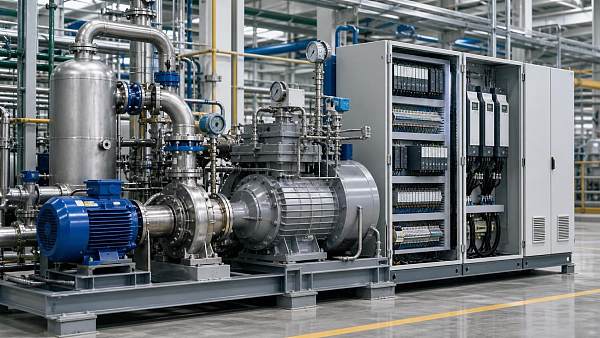
This scenario-based view is especially relevant in integrated fluid control environments such as those covered by FCSM, where pumps, valves, compressors, and separation units are increasingly tied into one digital operating framework. In such systems, process control innovation supports not only valve response, but also loop transparency, asset health visibility, and lifecycle efficiency.
Scenario 1: Tight control loops in chemical and thermal process lines
In chemical reactors, heat exchangers, steam conditioning stations, and high-temperature fluid lines, the main requirement is repeatable and stable modulation. Here, process control innovation shows its value through adaptive calibration, friction compensation, and precise stem positioning under changing pressure and temperature loads. Traditional positioners may hold a nominal setpoint, but smart versions can detect hysteresis, excessive deadband, and air leakage before loop quality noticeably degrades.
Core judgment points in this scenario include response speed, resolution, partial stroke verification, and the ability to maintain stable performance under vibration or thermal cycling. If the valve frequently hunts, overshoots, or drifts after shutdowns, a smart positioner with better tuning logic and diagnostics can deliver measurable process control innovation by reducing variability, lowering energy waste, and protecting downstream equipment.
Scenario 2: High-cycle service in compressor, air, and utility networks
Compressor recycle loops, air distribution headers, utility steam lines, and fast-acting pressure control duties place different stress on smart valve positioners. The issue is less about static precision alone and more about durability, dynamic response, and air management. In these systems, process control innovation often means improved spool valve design, lower pneumatic consumption, faster signal interpretation, and onboard diagnostics that flag cycle-count-related wear.
A useful evaluation question is whether the positioner supports sustained high-frequency movement without losing positioning integrity. If compressed air quality fluctuates or network pressure varies, the positioner should still respond predictably. Position feedback quality, actuator matching, and alerting for abnormal stroke demand become decisive factors in avoiding instability, wasted compressed air, and unplanned intervention.
Scenario 3: Corrosive, remote, or hard-to-access fluid handling environments
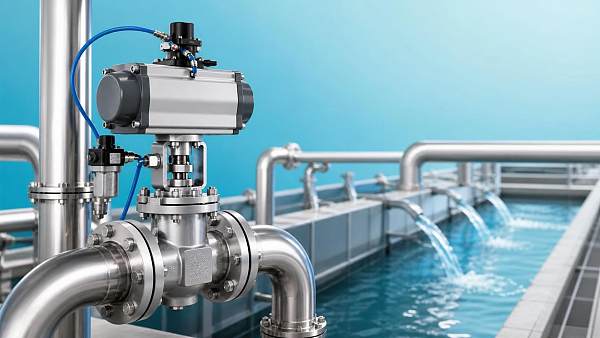
Water treatment plants, desalination skids, mining slurry support systems, and remote filtration or separation units often prioritize reliability in hostile conditions. Moisture ingress, salt exposure, corrosive vapor, and limited field access increase the value of process control innovation that reduces manual inspection frequency. Smart valve positioners with robust enclosure protection, digital communication, and condition monitoring can significantly improve operational continuity in these sites.
The critical judgment points here include ingress protection, corrosion resistance, communication redundancy, and ease of remote setup. In remote assets, the advantage of process control innovation is not only better control but fewer unnecessary trips to the field. Alerts tied to travel deviation, actuator stiffness, or supply air issues help maintenance teams prioritize work based on evidence rather than routine guesswork.
Scenario 4: Energy-sensitive operations pursuing decarbonization goals
In sectors working toward lower energy intensity, smart valve positioners are increasingly evaluated as contributors to broader system efficiency. This is common in pump recirculation control, cooling water management, boiler support systems, and integrated process skids where poor control behavior causes excess throttling losses, unstable pump loading, or unnecessary compressor runtime. In these situations, process control innovation improves how the entire loop performs rather than only the valve itself.
A positioner that minimizes oscillation, supports better tuning, and communicates health data to higher-level platforms can help reduce energy waste over time. The business case is stronger when control instability has already been linked to product loss, steam imbalance, pressure swings, or avoidable maintenance events.
How scenario requirements differ in practice
The table below shows how process control innovation should be assessed differently depending on service conditions rather than treated as a one-size-fits-all feature set.
What process control innovation should include before selection
When comparing smart valve positioners, process control innovation should be tested against practical selection criteria rather than marketing claims. The most useful checkpoints include:
- Digital communication compatibility with existing control architecture, such as HART or fieldbus-based environments.
- Diagnostic depth, including valve signature data, travel deviation alarms, supply pressure monitoring, and seat or packing friction indicators.
- Mechanical and environmental suitability for vibration, moisture, corrosive exposure, and ambient temperature extremes.
- Actuator matching quality, because even advanced process control innovation cannot compensate for poor mechanical pairing.
- Ease of commissioning, local interface clarity, and repeatability of calibration after shutdowns or maintenance events.
For broader fluid control systems, it is also worth checking whether positioner data can be connected to predictive maintenance strategies used for pumps, compressors, and filtration assets. This cross-equipment visibility is where process control innovation becomes strategically valuable rather than merely incremental.
Common scenario misjudgments that reduce smart positioner value
One frequent mistake is selecting a smart valve positioner based only on nominal accuracy while overlooking valve friction, actuator sizing, or air supply quality. In practice, poor pneumatic conditions can erase the gains promised by process control innovation. Another common error is paying for advanced diagnostics without integrating the data into maintenance or control workflows, leaving valuable health signals unused.
A further misjudgment appears in severe-service applications where enclosure durability and corrosion resistance are treated as secondary issues. In remote or wet environments, communication reliability and physical robustness may be more important than headline positioning speed. There is also a tendency to evaluate positioners independently of control valve trim behavior, even though true process control innovation depends on the complete valve-actuator-positioner package.
Practical next steps for scenario-based adoption
A practical path forward starts with identifying which loops suffer most from instability, maintenance burden, or hidden energy loss. Then map those loops by scenario: precision-critical, high-cycle, remote, or energy-sensitive. For each group, define required diagnostics, communication level, environmental resistance, and response behavior. This approach turns process control innovation into a measurable upgrade path instead of a generic modernization effort.
In integrated fluid systems, the best results come when smart valve positioner data is reviewed alongside pump performance, compressor efficiency, and separation process trends. That wider perspective supports stronger root-cause analysis, more accurate maintenance timing, and better control over total system energy use. As industrial operations move deeper into digital and low-carbon transformation, process control innovation in smart valve positioners will continue to be a decisive factor in reliable, efficient, and intelligent flow control.
Related News
 How fluid control digitalization improves valve maintenance planningProcess Control ArchitectFluid control digitalization helps teams prioritize valve maintenance, reduce unplanned downtime, and improve reliability with actionable condition data.
 How smart valve positioners improve process control valve accuracyProcess Control ArchitectDiscover how smart positioners improve process control valve accuracy, reduce friction-related errors, enhance stability, and enable predictive maintenance.
 How to evaluate a valve automation supplier before placing an orderProcess Control ArchitectChoose a valve automation supplier with confidence. Learn how to assess engineering capability, compatibility, testing, lead times, and lifecycle support before ordering.
 How Does Industrial Automation Change Valve Specification Requirements?Process Control ArchitectHow does industrial automation change valve specification needs? Discover smarter sizing, diagnostics, protocols, fail-safe design, and lifecycle strategies for reliable control.
 Retrofit vs replacement automation: which option minimizes downtime?Process Control ArchitectRetrofit vs replacement automation: compare downtime, integration risk, lifecycle costs, and phased execution to protect uptime and modernize with confidence.
 When smart pneumatic control valves improve water treatment stabilityProcess Control ArchitectSmart pneumatic control valves for water treatment improve flow precision, dosing consistency, diagnostics, and plant stability. Learn how to select the right solution.
 When predictive maintenance for process valves pays off in plant operationsProcess Control ArchitectPredictive maintenance for process valves can cut downtime, reduce energy loss, and boost reliability. Learn when it pays off in plant operations—and how to justify the investment.
 Revised EN 14382:2026 Adds EMC Immunity Test for Smart Valve Positioners in EU ExportsProcess Control ArchitectEN 14382:2026 now mandates EMC immunity testing for Smart Valve Positioners, reshaping EU export compliance for valve OEMs and integrators. Learn what changed and how to prepare.
 FDA Tightens Import Rules for Smart Valve PositionersProcess Control ArchitectSmart valve positioners now face stricter FDA import rules. Learn how IEC 61508 SIL2 or UL 61508 documentation affects U.S. clearance, suppliers, and compliance planning.
 EN 14382:2026 Raises EU Entry Bar for Smart PositionersProcess Control ArchitectEN 14382:2026 raises the EU entry bar for Smart Valve Positioners with a 150 ms step response cap and IEC 62443-4-2 cybersecurity checks. Learn what exporters, buyers, and compliance teams must do before Nov 1, 2026.
 High-Precision Stainless Steel Control Valves for Corrosive Process LinesProcess Control ArchitectHigh-precision control valves stainless steel solutions improve corrosion resistance, flow stability, and safety in demanding process lines. Discover how to reduce downtime and boost control accuracy.
 How a Valve Performance Consultant Improves Uptime and Control AccuracyProcess Control ArchitectValve performance consultant insights to improve uptime, control accuracy, and energy efficiency. Learn how targeted diagnostics solve hidden valve issues across process systems.