Smart Fluid Control Valves: Common Failures and Fixes




Why failure patterns change across real operating conditions
Smart fluid control valves sit at the center of process stability, but their failure modes rarely look identical from one plant area to another.
A valve handling treated water behaves differently from one exposed to flashing condensate, abrasive slurry, or compressed air with oil carryover.
That is why troubleshooting smart fluid control valves starts with context, not only with a fault code or nameplate specification.
In actual service, sticking, leakage, unstable positioning, and delayed response often reflect upstream process changes, actuator condition, and instrument quality together.
For a platform such as FCSM, this wider view matters because pumps, compressors, filters, and smart pneumatic valves influence each other across the same fluid network.
A control valve may appear defective, while the deeper issue is cavitation from a pump duty shift, dirty air from a compressor line, or solids breakthrough from separation equipment.
The practical task is to identify which failure belongs to the valve itself and which one belongs to the surrounding system.
In corrosive and high-temperature lines, leakage is rarely just a sealing problem
In chemical processing and thermal utility service, internal leakage and stem packing leakage are common complaints around smart fluid control valves.
The obvious assumption is worn seats or loose packing. The more accurate check is whether the valve trim still matches today’s process envelope.
Higher temperature swings, corrosive media concentration shifts, and repeated throttling near closed position can erode trim surfaces faster than maintenance plans expect.
When leakage appears after turnaround, misalignment during reassembly can be just as important as material degradation.
A useful field sequence is short and disciplined.
- Confirm whether leakage is through-seat, around-stem, or from body joints.
- Compare current pressure drop and temperature with original valve sizing assumptions.
- Inspect trim, packing, and bonnet materials against present chemical compatibility.
- Review actuator travel history for excessive hunting near the shutoff zone.
The fix may involve replacing soft parts, but stable results often require trim upgrade, anti-cavitation design, or revised control tuning.
When response becomes slow, the valve is not always the first thing to blame
Delayed opening or sluggish modulation in smart fluid control valves often shows up in compressor headers, utility skids, and packaged process units.
These systems depend heavily on clean instrument air, healthy positioners, and consistent signal transmission.
If a valve starts lagging after a compressor maintenance event, the problem may be moisture, oil aerosol, or unstable supply pressure.
In digitalized plants, signal delay can also come from calibration drift, loose wiring, grounding noise, or poor handoff between DCS logic and smart positioner settings.
A common field mistake is replacing the actuator before checking air preparation and signal quality.
More reliable troubleshooting follows the energy and information path.
- Verify supply air pressure, dew point, and filtration condition.
- Check I/P converter output and actual travel against command signal.
- Review stroke speed settings, deadband, and fail action configuration.
- Inspect tubing restrictions, diaphragm wear, and solenoid response.
This matters especially where air compressor efficiency programs and low-carbon retrofits change operating cycles more often than before.
Water, slurry, and separation duty create very different wear signatures
Smart fluid control valves used around filtration, wastewater treatment, and fluid separation equipment fail in ways that can look deceptively similar.
A valve in clarified water service may fail from scale buildup or biofouling. A valve near sludge transfer may fail from abrasion and solids packing.
In membrane systems such as RO or ZLD-related loops, unstable control can begin with pressure pulsation rather than trim damage.
That distinction affects both repair speed and spare strategy.
In these environments, smart fluid control valves should be judged together with separation performance, pump pulsation, and solids management, not in isolation.
Critical flow and cavitation need a different diagnosis mindset
Some of the most expensive control valve failures begin as vibration, trim noise, or unstable downstream pressure during high differential pressure service.
In cooling water, condensate, flashing liquid, and pressure letdown applications, smart fluid control valves may suffer cavitation or flashing damage before visible leakage appears.
Field teams sometimes misread this as actuator instability because the valve position keeps changing while process control gets worse.
The better question is whether the valve is operating too often in the destructive velocity range.
This is where FCSM’s broader fluid machinery view becomes useful. Pump cavitation, valve cavitation, and line acoustics can amplify one another.
Recommended fixes usually combine mechanical and control actions.
- Review actual Cv demand versus installed trim characteristic.
- Check pressure recovery factor and flashing risk at normal loads.
- Use multistage trim or anti-cavitation trim where pressure drop is unavoidable.
- Retune loops to reduce aggressive oscillation around critical openings.
Different applications ask for different maintenance priorities
The maintenance plan for smart fluid control valves should reflect process consequences, not just calendar intervals.
A shutdown valve on a corrosive line needs different attention from a continuously modulating valve on a stable utility loop.
The comparison below helps translate operating context into practical service priorities.
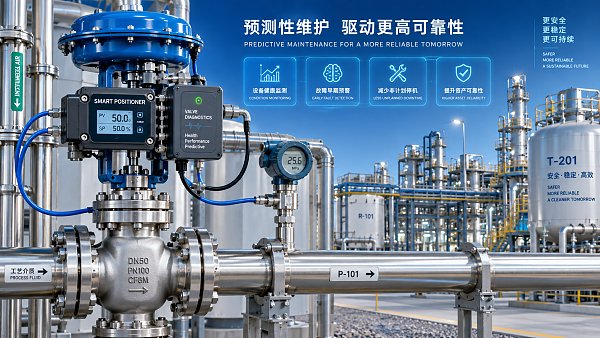
This is also where predictive maintenance earns value, especially when digital positioner data is reviewed alongside pump, compressor, and filtration performance.
Where smart fluid control valves are often misjudged
Several recurring errors make valve problems harder and more expensive than they need to be.
- Treating similar media as identical, while viscosity, solids content, or gas entrainment have changed.
- Looking only at purchase specification and ignoring actual operating range after process debottlenecking.
- Replacing trim without checking actuator sizing, stroking force, and air quality.
- Reading noisy control as a tuning issue when the root cause is cavitation or pulsation.
- Judging valve health from one failure event instead of trend data across seasons and load shifts.
These misjudgments matter more in mixed industrial environments, where decarbonization retrofits and digital upgrades quietly alter process conditions over time.
A practical next step for fixing and adapting valve performance
A solid troubleshooting path for smart fluid control valves starts by mapping the operating scene before changing parts.
Document actual medium, pressure drop, cycling frequency, air quality, upstream equipment behavior, and recent process changes.
Then compare those findings with installed trim design, actuator capacity, and positioner configuration.
Where failures repeat, build a simple scene-based standard: what normal travel looks like, what noise level is acceptable, and which deviations trigger inspection.
That approach reduces unnecessary replacement, improves uptime, and keeps smart fluid control valves aligned with broader reliability goals across pumps, compressors, and separation systems.
For ongoing analysis, it helps to review valve symptoms as part of the full fluid network rather than as isolated component faults.
Related News
 How fluid control digitalization improves valve maintenance planningProcess Control ArchitectFluid control digitalization helps teams prioritize valve maintenance, reduce unplanned downtime, and improve reliability with actionable condition data.
 How smart valve positioners improve process control valve accuracyProcess Control ArchitectDiscover how smart positioners improve process control valve accuracy, reduce friction-related errors, enhance stability, and enable predictive maintenance.
 How to evaluate a valve automation supplier before placing an orderProcess Control ArchitectChoose a valve automation supplier with confidence. Learn how to assess engineering capability, compatibility, testing, lead times, and lifecycle support before ordering.
 How Does Industrial Automation Change Valve Specification Requirements?Process Control ArchitectHow does industrial automation change valve specification needs? Discover smarter sizing, diagnostics, protocols, fail-safe design, and lifecycle strategies for reliable control.
 Retrofit vs replacement automation: which option minimizes downtime?Process Control ArchitectRetrofit vs replacement automation: compare downtime, integration risk, lifecycle costs, and phased execution to protect uptime and modernize with confidence.
 When smart pneumatic control valves improve water treatment stabilityProcess Control ArchitectSmart pneumatic control valves for water treatment improve flow precision, dosing consistency, diagnostics, and plant stability. Learn how to select the right solution.
 When predictive maintenance for process valves pays off in plant operationsProcess Control ArchitectPredictive maintenance for process valves can cut downtime, reduce energy loss, and boost reliability. Learn when it pays off in plant operations—and how to justify the investment.
 Revised EN 14382:2026 Adds EMC Immunity Test for Smart Valve Positioners in EU ExportsProcess Control ArchitectEN 14382:2026 now mandates EMC immunity testing for Smart Valve Positioners, reshaping EU export compliance for valve OEMs and integrators. Learn what changed and how to prepare.
 FDA Tightens Import Rules for Smart Valve PositionersProcess Control ArchitectSmart valve positioners now face stricter FDA import rules. Learn how IEC 61508 SIL2 or UL 61508 documentation affects U.S. clearance, suppliers, and compliance planning.
 EN 14382:2026 Raises EU Entry Bar for Smart PositionersProcess Control ArchitectEN 14382:2026 raises the EU entry bar for Smart Valve Positioners with a 150 ms step response cap and IEC 62443-4-2 cybersecurity checks. Learn what exporters, buyers, and compliance teams must do before Nov 1, 2026.
 High-Precision Stainless Steel Control Valves for Corrosive Process LinesProcess Control ArchitectHigh-precision control valves stainless steel solutions improve corrosion resistance, flow stability, and safety in demanding process lines. Discover how to reduce downtime and boost control accuracy.
 How a Valve Performance Consultant Improves Uptime and Control AccuracyProcess Control ArchitectValve performance consultant insights to improve uptime, control accuracy, and energy efficiency. Learn how targeted diagnostics solve hidden valve issues across process systems.