How to Vet an Industrial Automation Solutions Supplier




Selecting an industrial automation solutions supplier is no longer just a procurement task—it is a technical risk decision that affects uptime, energy efficiency, safety, and long-term process resilience. For evaluators working with pumps, control valves, compressors, and fluid separation systems, the right partner must prove engineering depth, integration capability, lifecycle support, and measurable performance under real operating conditions. This guide outlines the key criteria to assess before committing to a supplier.
In fluid control environments, a weak automation decision can affect cavitation margins, valve stability, compressor energy use, and filtration reliability. Technical evaluators therefore need a structured method that tests claims against drawings, data, standards, and site conditions.
Define the Technical Scope Before Comparing Suppliers
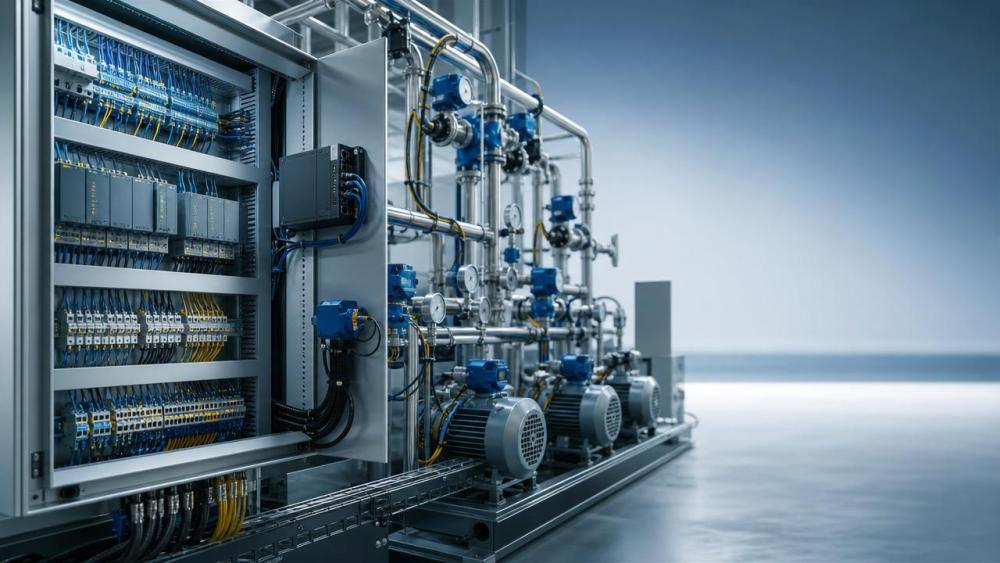
Before shortlisting any industrial automation solutions supplier, define what the automation system must control, measure, protect, and optimize. A useful scope covers at least 4 layers: field instrumentation, control logic, power equipment, supervisory software, and lifecycle services.
For pump stations, valve skids, compressor rooms, and separation units, the scope should include process variables such as flow, pressure, temperature, vibration, dissolved solids, and energy consumption. Missing 1 critical variable can distort the entire control philosophy.
Map Automation Requirements to Process Assets
A credible industrial automation solutions supplier should ask for process diagrams, utility limits, operating modes, alarm philosophy, and maintenance constraints. If discussions begin only with hardware brands, the evaluation is already too shallow.
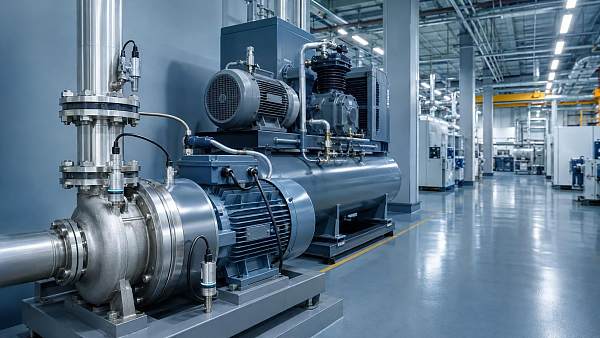
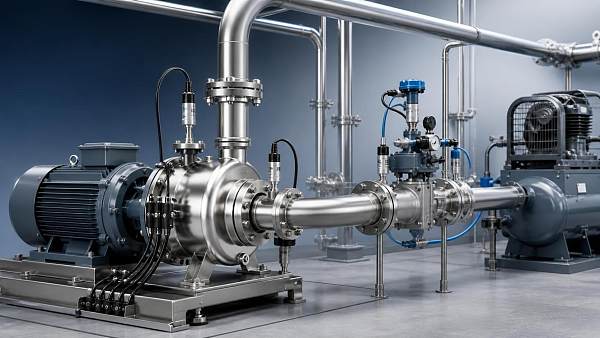
For centrifugal pumps, evaluators should examine whether the supplier understands minimum continuous stable flow, NPSH margin, seal protection, and variable frequency drive behavior. These factors directly influence leakage risk and bearing life.
For pneumatic control valves, the supplier must evaluate valve sizing, actuator response, positioner diagnostics, deadband, fail-safe action, and noise under critical flow. A typical acceptance target may require response verification within 1–3 seconds for key loops.
Separate System Integrators from Component Resellers
Many vendors can quote PLCs, sensors, panels, and drives. Fewer can translate a process problem into a stable automation architecture. The difference becomes visible during design reviews, simulation, commissioning, and abnormal operation handling.
Use the following matrix to identify whether a potential industrial automation solutions supplier has real integration capability or is mainly assembling catalog items.
The strongest signal is not a long product list. It is the supplier’s ability to link control architecture to process risk, energy performance, and maintainability across a 10–15 year asset lifecycle.
Assess Engineering Depth and Domain Knowledge
An industrial automation solutions supplier serving general machinery must understand both automation technology and rotating or fluid equipment behavior. Control systems for fluids and gases are not static; they respond to viscosity, fouling, load variation, cavitation, and ambient temperature.
During technical evaluation, ask the supplier to explain at least 3 previous engineering challenges without revealing confidential client data. The answer should include symptoms, root cause, corrective action, and measured outcome.
Key Competencies for Fluid and Gas Automation
- Pump control: anti-cavitation logic, dry-run protection, seal flush monitoring, parallel pump sequencing, and VFD tuning.
- Valve control: positioner diagnostics, split-range control, fail-open or fail-close strategy, stroking tests, and trim erosion monitoring.
- Compressor systems: pressure band optimization, dew point control, leak detection, load-unload reduction, and kWh per cubic meter tracking.
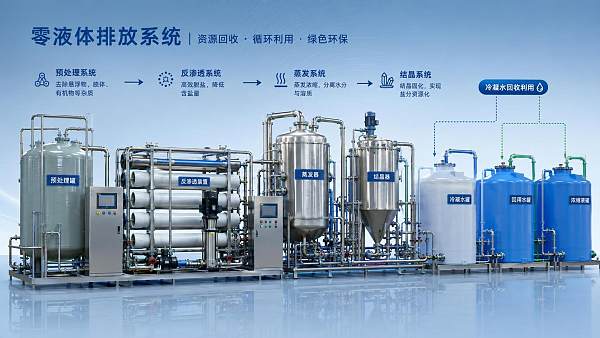
- Separation systems: membrane fouling alarms, differential pressure trending, backwash sequencing, RO recovery control, and ZLD-related monitoring.
A qualified industrial automation solutions supplier should turn these competencies into documents, not verbal assurances. Look for I/O lists, control narratives, cause-and-effect matrices, network diagrams, and maintenance procedures.
Questions That Reveal Real Expertise
Technical evaluators should prepare specific questions before commercial negotiation. For example, ask how the supplier handles a centrifugal pump running near shutoff for more than 5 minutes, or how valve hunting is detected in a pneumatic loop.
For compressed air, ask whether the proposed control system can calculate specific power and identify leakage trends. For filtration, ask how differential pressure thresholds are adjusted as membranes age over 6–24 months.
Practical Red Flags
Be cautious if an industrial automation solutions supplier avoids discussing worst-case operation, bypass mode, cybersecurity, or manual fallback. These issues often determine whether a plant can continue safely during sensor failure or network interruption.
Another red flag is the absence of parameter ownership. If no one defines who can change PID settings, alarm limits, drive parameters, or recipe values, the automation system may degrade within months after handover.
Verify Architecture, Standards, and Integration Capability
A robust automation architecture should remain stable across production changes, maintenance windows, and partial equipment upgrades. Evaluate whether the industrial automation solutions supplier designs for today’s scope and tomorrow’s expansion.
Typical process plants may require 20–5,000 I/O points, depending on unit size. Even small systems should define signal type, redundancy needs, communication protocol, enclosure rating, and environmental limits.
Check Compatibility Across Equipment Families
Industrial fluid systems rarely come from a single manufacturer. Pumps, smart valves, compressors, analyzers, flowmeters, and filtration skids must exchange reliable data through protocols such as Modbus TCP, PROFINET, EtherNet/IP, HART, or OPC UA.
The right industrial automation solutions supplier should define how data is collected, timestamped, validated, and displayed. Without this discipline, dashboards may look modern but fail to support root-cause analysis.
Use this checklist to compare architecture proposals during the technical bid stage.
The best proposal is usually not the most complex one. It is the architecture that balances reliability, spare capacity, cybersecurity, diagnostics, and maintainability without adding unnecessary failure points.
Standards and Safety Expectations
Ask whether the industrial automation solutions supplier works with common electrical, machinery, and safety practices such as IEC 60204, IEC 61131, ISO 13849, IEC 61511, or relevant local codes. The exact standard depends on plant region and risk class.
For high-pressure plunger pumps or compressor packages, safety interlocks should be documented in a cause-and-effect matrix. Pressure, temperature, vibration, oil level, and emergency stop signals need defined trip actions and reset permissions.
Evaluate Project Delivery, Testing, and Commissioning Discipline
A technically sound design can still fail if delivery is weak. The industrial automation solutions supplier should present a schedule covering design freeze, procurement, programming, panel assembly, FAT, shipment, installation support, SAT, and handover.
For mid-sized systems, a practical timeline often ranges from 8–20 weeks, depending on panel quantity, imported components, software complexity, and site readiness. Rush schedules should be assessed against engineering and testing risks.
Minimum Testing Stages
- Document review: verify drawings, I/O list, control narrative, network plan, and inspection test plan before procurement.
- Factory acceptance test: simulate key inputs, trips, alarms, HMI screens, and communication with drives or smart instruments.
- Site acceptance test: confirm wiring, loop checks, motor rotation, field signal scaling, and operator functions.
- Performance run: validate stable operation over 24–72 hours under representative flow, pressure, and load conditions.
A disciplined industrial automation solutions supplier treats FAT as risk removal, not ceremony. Test scripts should cover normal operation, abnormal scenarios, power loss, communication failure, and manual override.
Acceptance Criteria That Should Be Measurable
Avoid acceptance language such as “system runs normally.” Use measurable criteria: loop stability within agreed limits, alarm response within seconds, data refresh interval, energy dashboard accuracy, and successful restart after power interruption.
For compressor systems, evaluators may request baseline kWh tracking before and after control tuning. For pumps, verify stable operation across at least 3 operating points instead of only rated flow.
Documentation Deliverables
At handover, require final electrical drawings, program backup, tag database, alarm list, spare parts list, calibration records, network settings, and operating manual. These documents reduce dependence on individual engineers after commissioning.
Review Lifecycle Support, Energy Performance, and Digital Readiness
After start-up, automation value depends on support quality. A reliable industrial automation solutions supplier should define remote support rules, emergency response time, spare parts availability, software update policy, and annual review frequency.
For process industries focused on decarbonization, support should also include energy optimization. Pumps and compressors often run thousands of hours per year, so small improvements in control strategy can have meaningful lifecycle impact.
Service Levels to Clarify Before Contract Award
- Remote technical response: define whether first response is within 4 hours, 8 hours, or next business day.
- Critical spare parts: identify PLC modules, power supplies, communication cards, positioners, and drive accessories.
- Software governance: control access levels, backup frequency, change approval, and version history.
- Optimization reviews: schedule quarterly or semiannual reviews for energy, alarms, downtime, and maintenance trends.
A supplier that cannot explain post-commissioning support may leave the plant with a working system that slowly loses efficiency. Lifecycle evaluation should carry at least 25–35% of the technical scoring weight.
Digitalization and Predictive Maintenance
Modern automation should do more than start and stop equipment. The industrial automation solutions supplier should support condition indicators such as vibration trend, valve travel deviation, compressor temperature drift, and membrane differential pressure rise.
For FCSM’s focus areas, digital readiness means connecting fluid dynamics, thermodynamics, and separation performance into usable intelligence. A pump cavitation warning or compressor efficiency trend is valuable only when operators can act on it.
Commercial Evaluation Should Follow Technical Fit
Price matters, but it should be compared after clarifying scope, exclusions, testing, documentation, training, and service. A low initial quote may become expensive if it excludes commissioning days, spare modules, or software licenses.
Use total cost of ownership over 5–10 years rather than only purchase price. Consider downtime exposure, energy consumption, engineering change costs, replacement parts, and the internal labor needed to maintain the system.
Practical Vetting Workflow for Technical Evaluators
A structured workflow helps teams compare suppliers consistently. It also prevents commercial pressure from bypassing engineering concerns. The process below is suitable for new installations, retrofit projects, and multi-site standardization programs.
A 6-Step Supplier Vetting Process
- Issue a technical questionnaire covering process scope, I/O count, standards, service model, and integration experience.
- Hold a process review meeting with operations, maintenance, electrical, instrumentation, and safety representatives.
- Request a preliminary architecture, control philosophy, schedule, and list of exclusions within 7–15 days.
- Score technical proposals using weighted criteria, including safety, maintainability, data quality, and lifecycle support.
- Conduct clarification rounds focused on assumptions, interfaces, testing details, and abnormal operating cases.
- Finalize contract terms with clear deliverables, acceptance criteria, change control, and warranty support boundaries.
This process gives every industrial automation solutions supplier a fair opportunity while protecting the buyer from vague promises. It also creates a record that supports future audits and project lessons learned.
Common Mistakes to Avoid
Do not select only by preferred component brand. A premium PLC cannot compensate for poor loop design, weak panel workmanship, undocumented interlocks, or missing site support.
Do not ignore operator usability. HMI screens should prioritize alarms, trends, equipment status, and manual actions. A cluttered interface can delay response during pressure surges, compressor trips, or filtration upset events.
Do not postpone cybersecurity. Even basic measures such as user roles, network segmentation, backup policy, and controlled remote access should be defined before the system goes live.
Final Decision: Choose Evidence Over Assurances
Vetting an industrial automation solutions supplier requires evidence: engineering documents, test procedures, lifecycle plans, clear interfaces, and measurable acceptance criteria. The best partner can connect process behavior with automation logic and long-term operational value.
For technical evaluators in pump, valve, compressor, and separation projects, the decision should support uptime, energy efficiency, safety, and digital transformation. A capable supplier helps convert fluid machinery into a controlled, observable, and continuously optimized system.
FCSM helps industry professionals interpret fluid control trends, evaluate technical risks, and understand the machinery intelligence behind modern process operations. To explore supplier evaluation insights, compare automation approaches, or obtain a more tailored assessment framework, contact us to learn more solutions.
Related News
 What drives industrial wastewater treatment cost per cubic meter?Dr. Alistair VaughnIndustrial wastewater treatment cost per cubic meter depends on influent load, effluent targets, energy, technology, and sludge disposal. Explore the key cost drivers.
 How to verify CE compliance for fluid separation equipmentDr. Alistair VaughnFluid separation equipment CE verification made practical: learn how to check declarations, risk assessments, technical files, pressure safety, and installation readiness.
 Separation equipment trends reshaping industrial wastewater treatmentDr. Alistair VaughnSeparation equipment trends are reshaping industrial wastewater treatment through smarter membranes, modular systems, digital monitoring, and resource recovery strategies.
 When stainless steel separation equipment is the right choice for hygienic processesDr. Alistair VaughnStainless steel separation equipment: discover when hygienic design, corrosion resistance, CIP cleanability, and lifecycle reliability make it the smart choice.
 What to assess before choosing a process industry automation supplierDr. Alistair VaughnChoose a process industry automation supplier with confidence. Assess engineering depth, lifecycle reliability, digital integration, energy performance, and safety before you buy.
 How process control innovation in refineries reduces unplanned shutdownsDr. Alistair VaughnDiscover how process control innovation in refineries detects early deviations, improves valve and equipment reliability, and helps prevent costly unplanned shutdowns.
 What should a zero liquid discharge systems integrator include in its proposal?Dr. Alistair VaughnZero liquid discharge systems integrator proposal checklist: compare guarantees, utilities, scope, controls, waste handling, and lifecycle risk before award.
 Industrial wastewater treatment plant design: sizing for flow and loadDr. Alistair VaughnIndustrial wastewater treatment plant design guide: size systems for peak flow, pollutant loads, reliability, compliance, and lower lifecycle costs.
 Can predictive maintenance and machinery diagnostics prevent downtime?Dr. Alistair VaughnPredictive maintenance machinery diagnostics help reduce unplanned downtime by detecting early equipment issues, improving reliability, and enabling smarter maintenance decisions.
 Can a digital transformation machinery platform cut unplanned downtime?Dr. Alistair VaughnDiscover how a digital transformation machinery platform connects asset data, maintenance workflows, and process insights to reduce unplanned downtime.
 How water treatment equipment sizing affects operating costsDr. Alistair VaughnWater treatment equipment sizing shapes energy, chemical, and maintenance costs. Learn how to balance flow, pressure, recovery, and reliability for efficient operation.
 When does food processing automation justify the upfront investment?Dr. Alistair VaughnIndustrial automation solutions for food processing: discover when automation delivers measurable ROI through higher throughput, lower waste, reliable utilities, and stronger food safety control.