Hannover Messe 2027 Sets Green Filing Deadline




On June 19, 2026, Deutsche Messe opened global recruitment for a dedicated Magnetic Drive Pumps zone at Hannover Messe 2027, but the immediate point of attention for Chinese exhibitors is a much earlier compliance deadline: by June 30 they must submit a TÜV SÜD-certified Green Manufacturing Declaration or risk losing booth eligibility. For magnetic drive pump manufacturers, export-facing sales teams, certification partners, sourcing functions, and downstream buyers, this development is worth tracking because it connects exhibition access directly to documented environmental and material compliance.
What the recruitment notice requires
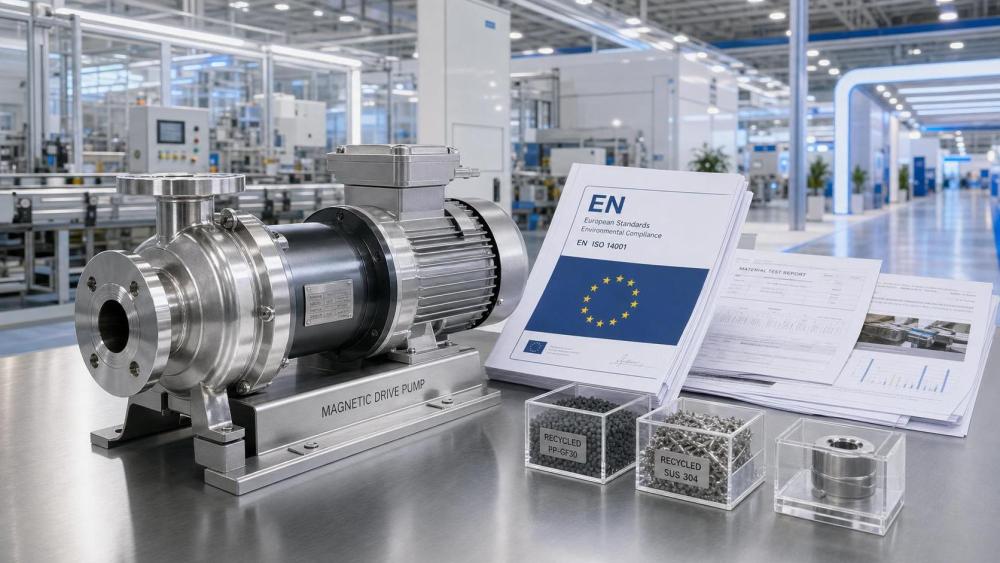
According to the provided event summary, Deutsche Messe launched global招商 for the Hannover Messe 2027 theme area focused on Magnetic Drive Pumps on June 19, 2026. The requirement specifically applied to Chinese participating companies, which must submit a TÜV SÜD-certified Green Manufacturing Declaration by June 30.
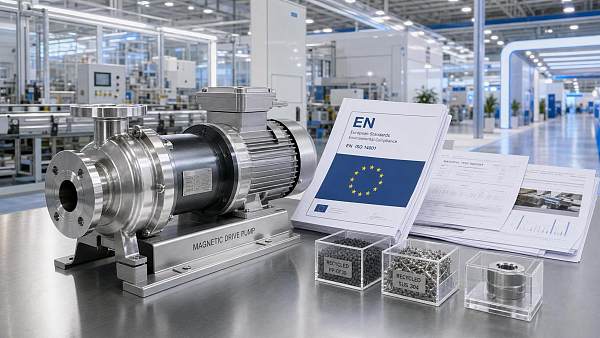
The declaration must cover three indicators: carbon footprint under ISO 14067, absence of hazardous substances under RoHS3, and the rate of recycled material use. The stated consequence for failing to submit the declaration is cancellation of booth qualification.
Where the pressure is likely to be felt first
Export-oriented pump manufacturers face a near-term documentation test
From an industry perspective, the most direct impact falls on Chinese magnetic drive pump producers planning to exhibit. The pressure is not only on product presentation, but on whether environmental and material claims can be supported through the required certified declaration within the stated deadline.
Certification and compliance service partners become part of the timeline
Analysis shows that service providers involved in testing, certification, and technical documentation may also be affected because the requirement is tied to a TÜV SÜD-certified filing. In practical terms, this shifts attention to document readiness, indicator consistency, and the ability to align internal data with third-party certification requirements.
Procurement and supply chain teams may need closer upstream coordination
What deserves closer attention is the inclusion of RoHS3 and recycled material usage in the required declaration. For companies preparing to participate, procurement and supplier-management teams may need to confirm whether upstream material information, restricted-substance status, and recycled-content records are sufficiently organized for formal submission.
Buyers and channel partners may read the move as a screening signal
Observably, the requirement may also matter to distributors, project partners, and industrial buyers who use trade fairs to identify qualified suppliers. Even though the notice is about exhibition eligibility, it may influence how market participants assess a supplier's preparedness on compliance-related communication.
What companies should watch right now
Track whether the stated filing rule changes in official follow-up wording
Companies should closely watch any further official clarification around scope, document format, or acceptance criteria. The current information confirms the deadline, certification body, and three required indicators, but operational details beyond that still need to be checked against later official wording if released.
Separate certification readiness from marketing readiness
For teams preparing for Hannover Messe 2027, the immediate issue is not promotion planning but whether the Green Manufacturing Declaration can be completed in time. Commercial teams and exhibition teams may need to coordinate with compliance staff earlier than usual, since booth qualification is linked to the declaration rather than only to registration intent.
Review supplier documents tied to restricted substances and recycled content
Because the filing covers RoHS3 and recycled material usage, companies may need to verify whether supplier statements, material records, and internal specification files can support a consistent declaration package. The practical challenge is likely to sit in document completeness and cross-department coordination rather than in exhibition planning alone.
Prepare customer and partner communication if qualification is at risk
If a company is uncertain about meeting the June 30 deadline, it may need contingency communication for distributors, customers, or local partners expecting a Hannover Messe presence. Analysis shows that the business issue is not only qualification itself, but also how any change in participation status is explained externally.
How this development is best interpreted
Analysis shows that this update is best understood as a concrete compliance gate tied to a trade fair participation process, rather than as proof of a broader market outcome already in place. At the same time, the structure of the requirement suggests that environmental and material disclosures are being treated as practical entry conditions in at least this exhibition setting, which is why the industry is likely to continue watching similar requirements in future event or market-access contexts.
Why the June 30 deadline matters beyond the notice itself
At this stage, the news is significant less because it confirms a market-wide shift and more because it creates an immediate operational deadline for a defined group of exhibitors. It is more appropriate to understand this as a short-term compliance event with possible longer-term signaling value. Whether it becomes a broader industry pattern still requires continued observation.
Basis of this article and points for further verification
This article is based on the user-provided news title, event date, and event summary. For this type of industry update, relevant source categories would typically include official organizer notices, company announcements, industry association releases, authoritative media reporting, and standards-related documents. A specific official source link was not provided in the input, so the exact wording and any later updates still require ongoing verification. Follow-up attention should focus on whether additional official clarification appears regarding filing procedures, acceptance criteria, or any adjustment to the stated requirements.
Related News
 EU Extends Food Contact Rules to Pump Seal PartsFluid Dynamics ScientistEU food contact rules now cover pump seal parts. Learn how Regulation (EU) 2026/1382 affects FKM/FFKM magnetic drive pumps, EN 13130-1 testing, EU exports, and compliance planning.
 Aramco Sets Magnetic Drive Pump Rule for New RefineriesFluid Dynamics ScientistAramco Sets Magnetic Drive Pump Rule for New Refineries: learn how the SAES-H-100 update reshapes refinery procurement, supplier qualification, and API 685 compliance from October 2026.
 When to Specify Corrosion Resistant Pumps API 685Fluid Dynamics ScientistCorrosion resistant pumps API 685 become essential when leakage risk, hazardous fluids, and lifecycle costs outweigh standard sealed options. Learn when to specify them with confidence.
 Singapore Fast-Tracks Magnetic Drive Pump ApprovalFluid Dynamics ScientistSingapore fast-tracks magnetic drive pump approval under the NEA GreenTech Scheme, speeding ASEAN and Middle East exports with customs priority and 15% grant support.
 Aramco Tightens Magnetic Drive Pump Vendor RulesFluid Dynamics ScientistAramco Tightens Magnetic Drive Pump Vendor Rules: learn how API RP 14E and ISO 5199:2025 compliance now affects Q4 2026 tender access, GCC distributors, and EPC bidding readiness.
 Nickel Spike Lifts Magnetic Drive Pump CostsFluid Dynamics ScientistNickel Spike Lifts Magnetic Drive Pump Costs as nickel volatility drives 8–10% higher new-order prices and 16–18 week lead times. See how buyers and suppliers should respond now.
 India Tightens Battery Checks for Pump ImportsFluid Dynamics ScientistIndia Tightens Battery Checks for Pump Imports: learn how BIS battery capacity verification, QR traceability, and longer customs timelines will impact pump shipments, compliance, and delivery planning.
 HANNOVER MESSE 2027 Tightens Green Entry for Chinese Magnetic Drive Pump ExhibitorsFluid Dynamics ScientistHANNOVER MESSE 2027 updates rules for Chinese magnetic drive pump exhibitors: ISO 14067 carbon footprint and green factory proof now decide entry. Learn the deadline, risks, and buyer impact.
 Hannover Messe 2027 Sets Green Filing DeadlineFluid Dynamics ScientistHannover Messe 2027 sets a June 30 green filing deadline for Chinese magnetic drive pump exhibitors. Learn the TÜV SÜD, ISO 14067, RoHS3 and recycled content rules before booth eligibility is at risk.
 Hannover Messe 2027 Pre-Sales Open With Focus on Magnetic Drive PumpsFluid Dynamics ScientistHannover Messe 2027 pre-sales open with Magnetic Drive Pumps in focus. Learn about API 685:2024 advantages, booth subsidies, buyer matching priority, and the August 31, 2026 deadline.
![]() EU Tightens Screening for Key Fluid EquipmentFluid Dynamics ScientistEU Tightens Screening for Key Fluid Equipment: learn how new EU FDI rules affect magnetic drive pumps, SWRO high-pressure pumps, and chemical process pumps, with compliance and delivery impacts.
EU Tightens Screening for Key Fluid EquipmentFluid Dynamics ScientistEU Tightens Screening for Key Fluid Equipment: learn how new EU FDI rules affect magnetic drive pumps, SWRO high-pressure pumps, and chemical process pumps, with compliance and delivery impacts. EPA VOC Rule Drives Shift to Sealless Magnetic PumpsFluid Dynamics ScientistEPA VOC rule is accelerating demand for sealless magnetic pumps. Learn how zero-leakage compliance, certification, and procurement shifts will impact chemical and pharmaceutical projects.