Dubai Buying Shift Puts Smart Valve Specs First




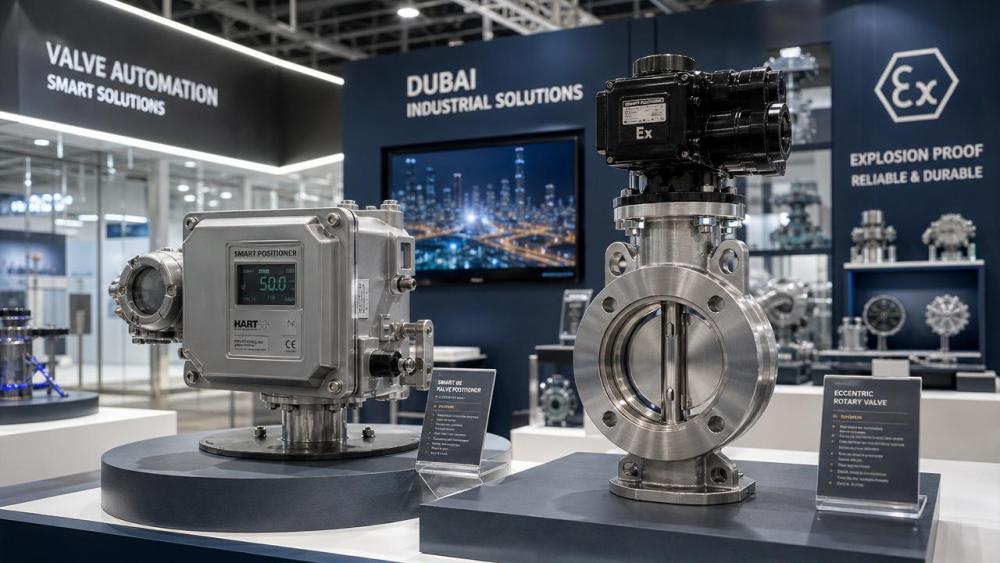
On June 10, 2026, the fourth Global Industrial Valve Procurement Festival opened in Dubai under the International Procurement Alliance (IPA), with buyer attention concentrating on Smart Valve Positioners and Eccentric Rotary Valves. From an industry perspective, this matters less as a routine trade fair update and more as a practical market signal: procurement expectations are being framed around specific certification, durability, and communication protocol requirements, which can directly affect exporters, component manufacturers, certification-related service providers, and delivery planning across the valve supply chain.
What the Dubai procurement event has confirmed
The event opened on June 10, 2026 and was organized by the International Procurement Alliance (IPA). It drew 713 buyers from 42 countries, including India, Turkey, Brazil, and Vietnam. Among them, 68% explicitly listed Smart Valve Positioners and Eccentric Rotary Valves as priority sourcing categories. Confirmed demand focused on explosion-proof products with ATEX/IECEx requirements, products designed for high cycle life of at least 1 million cycles, and products supporting HART and FOUNDATION Fieldbus protocols. An online B2B matching system was launched alongside the event, and the registration channel for Chinese suppliers remains open until June 25.
Why the sourcing criteria matter across the supply chain
Export-oriented manufacturers face a clearer compliance threshold
Analysis shows that manufacturers targeting overseas orders in these product categories may be affected first because buyer attention is not only on the valve product itself, but also on whether technical and certification conditions can be demonstrated early in the sourcing process. What deserves closer attention is the need to align product files, test materials, protocol support statements, and explosion-proof certification status with buyer screening requirements before commercial negotiation moves forward.
Procurement teams may shift from price comparison to document-based filtering
For procurement participants, the stated preference for ATEX/IECEx, high cycle life, and HART/FOUNDATION Fieldbus support suggests that supplier evaluation may increasingly begin with technical bid alignment and supporting documents rather than broad catalog review alone. Observably, this can affect vendor shortlisting, qualification checks, and delivery discussions, especially where buyers need proof that specifications match intended operating and control requirements.
Certification and testing service providers may see earlier involvement
From an industry perspective, certification-related firms and testing bodies may be drawn into the process sooner because the highlighted demand points are tied to verifiable standards or performance claims. The practical effect is not a confirmed regulatory change, but a stronger execution signal that conformity evidence, protocol declarations, and lifecycle-related validation may carry more weight in cross-border sourcing discussions.
Supply-chain and after-sales planning may come under closer review
Suppliers, logistics partners, and after-sales teams may also be affected because products with defined certification and protocol expectations typically require tighter consistency between quotations, shipped configurations, and field support materials. Analysis shows that any gap between sales claims and delivered specifications could become a procurement risk, particularly when sourcing moves through online B2B matching and faster cross-border vendor comparison.
What companies should track before responding
Check whether certification status is presentation-ready
Companies planning to register or engage buyers should review whether ATEX/IECEx-related materials are complete, current, and clearly mapped to the offered model range. Where the event information does not provide detailed execution rules, it is more appropriate to treat this as a prompt for internal verification rather than as proof that a uniform buyer review standard has already been enforced.
Prepare technical files around cycle life and protocol support
What deserves closer attention is whether product documentation can clearly support the stated buyer priorities on cycle life of at least 1 million cycles and HART/FOUNDATION Fieldbus compatibility. In practice, this means technical datasheets, test records, and specification sheets may become important procurement-facing materials even before detailed commercial terms are discussed.
Watch the timeline linked to supplier access
The registration window for Chinese suppliers is open until June 25, which makes timing a practical issue for companies still organizing product documentation and qualification materials. Analysis shows that late preparation could limit participation quality, especially if suppliers need to reconcile certification materials, protocol details, and product configuration statements before entering buyer matching.
Keep delivery and traceability statements consistent
Observably, companies should also pay attention to how product configuration, compliance claims, and after-sales commitments are described across quotations, brochures, and matching profiles. The event summary does not define mandatory post-award rules, but it does indicate that buyers are screening for technical reliability and standard alignment at an earlier stage.
Why this looks more like an execution signal than a new rule release
Analysis shows that the update is better understood as a procurement-side execution signal rather than a newly published law or formal regulatory text. The importance lies in the way buyer priorities are being articulated around ATEX/IECEx, service life, and communication protocols. That does not by itself confirm a new legal requirement across all markets, but it does show where commercial access conditions may be tightening in practice. For the industry, continued attention should remain on how these requirements appear in buyer communications, qualification requests, technical bid documents, and subsequent market feedback.
How the market may read this update for now
For now, it is more appropriate to understand this event as a near-term indicator of where procurement expectations are consolidating for Smart Valve Positioners and Eccentric Rotary Valves. The confirmed facts do not establish a universal regulatory change, yet they do point to a stricter link between product marketability and demonstrable compliance, technical interoperability, and durability claims. A neutral reading is that companies should treat the event as a practical warning to strengthen readiness, while still watching for further detail in actual procurement documents and follow-up buyer behavior.
Basis of this article and what still needs verification
This article is generated from the user-provided news title, event date, and event summary. For events of this type, commonly relevant source categories may include organizer announcements, regulator releases, customs or trade authority information, industry association updates, standards organization documents, and reporting by established trade media. No specific official source link was provided in the input, so any official documentation, detailed execution language, or follow-up procurement rules still requires continued verification. What still needs observation includes later procurement wording, certification interpretation in buyer requirements, tender document changes, industry feedback, and how participating companies implement these expectations in actual transactions.
Related News
 How fluid control digitalization improves valve maintenance planningProcess Control ArchitectFluid control digitalization helps teams prioritize valve maintenance, reduce unplanned downtime, and improve reliability with actionable condition data.
 How smart valve positioners improve process control valve accuracyProcess Control ArchitectDiscover how smart positioners improve process control valve accuracy, reduce friction-related errors, enhance stability, and enable predictive maintenance.
 How to evaluate a valve automation supplier before placing an orderProcess Control ArchitectChoose a valve automation supplier with confidence. Learn how to assess engineering capability, compatibility, testing, lead times, and lifecycle support before ordering.
 How Does Industrial Automation Change Valve Specification Requirements?Process Control ArchitectHow does industrial automation change valve specification needs? Discover smarter sizing, diagnostics, protocols, fail-safe design, and lifecycle strategies for reliable control.
 Retrofit vs replacement automation: which option minimizes downtime?Process Control ArchitectRetrofit vs replacement automation: compare downtime, integration risk, lifecycle costs, and phased execution to protect uptime and modernize with confidence.
 When smart pneumatic control valves improve water treatment stabilityProcess Control ArchitectSmart pneumatic control valves for water treatment improve flow precision, dosing consistency, diagnostics, and plant stability. Learn how to select the right solution.
 When predictive maintenance for process valves pays off in plant operationsProcess Control ArchitectPredictive maintenance for process valves can cut downtime, reduce energy loss, and boost reliability. Learn when it pays off in plant operations—and how to justify the investment.
 Revised EN 14382:2026 Adds EMC Immunity Test for Smart Valve Positioners in EU ExportsProcess Control ArchitectEN 14382:2026 now mandates EMC immunity testing for Smart Valve Positioners, reshaping EU export compliance for valve OEMs and integrators. Learn what changed and how to prepare.
 FDA Tightens Import Rules for Smart Valve PositionersProcess Control ArchitectSmart valve positioners now face stricter FDA import rules. Learn how IEC 61508 SIL2 or UL 61508 documentation affects U.S. clearance, suppliers, and compliance planning.
 EN 14382:2026 Raises EU Entry Bar for Smart PositionersProcess Control ArchitectEN 14382:2026 raises the EU entry bar for Smart Valve Positioners with a 150 ms step response cap and IEC 62443-4-2 cybersecurity checks. Learn what exporters, buyers, and compliance teams must do before Nov 1, 2026.
 High-Precision Stainless Steel Control Valves for Corrosive Process LinesProcess Control ArchitectHigh-precision control valves stainless steel solutions improve corrosion resistance, flow stability, and safety in demanding process lines. Discover how to reduce downtime and boost control accuracy.
 How a Valve Performance Consultant Improves Uptime and Control AccuracyProcess Control ArchitectValve performance consultant insights to improve uptime, control accuracy, and energy efficiency. Learn how targeted diagnostics solve hidden valve issues across process systems.