Langfang Trade Fair Draws Buyers to Smart Valves




On June 16, 2026, the China·Langfang International Economic and Trade Fair opens against a procurement backdrop that is becoming more rules-driven for valve suppliers. The confirmed focus from overseas buyers on Smart Valve Positioners and Eccentric Rotary Valves, together with repeated emphasis on IATF 16949 certification and localized service response, matters not only for manufacturers but also for exporters, certification-related service providers, and after-sales teams working across petrochemical, power, and water treatment supply chains.
What has been confirmed at the June event
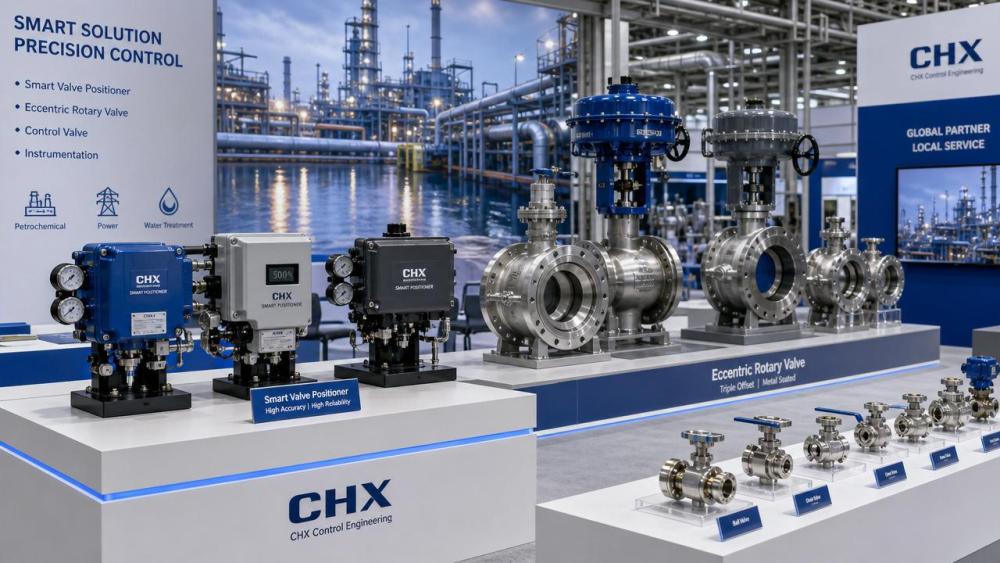
The fair is scheduled for June 16 to 18, 2026. More than 700 buyers from 12 countries, including Russia, Malaysia, Vietnam, and India, have been confirmed to attend. Among them, over 180 buyers have explicitly identified Smart Valve Positioners and Eccentric Rotary Valves as priority sourcing categories. The stated application areas include petrochemical, power, and water treatment. Buyer groups have also generally required suppliers to hold IATF 16949 certification and to demonstrate localized service response capability.
Why procurement rules are becoming more visible in this transaction cycle
For manufacturers, certification is moving closer to the front end of bidding
Analysis shows that the buyer emphasis on IATF 16949 changes the commercial conversation from product availability alone to supplier qualification at an earlier stage. For manufacturers of Smart Valve Positioners and Eccentric Rotary Valves, the immediate impact is likely to appear in pre-qualification, technical document submission, and customer screening, where certification status may function as a practical entry requirement rather than a supporting advantage.
For exporters, service capacity is becoming part of trade readiness
From an industry perspective, the repeated mention of localized service response suggests that overseas procurement is not being assessed only on price or hardware specifications. Export-oriented suppliers may therefore need to pay closer attention to how delivery support, post-sale coordination, technical response time, and local communication arrangements are presented in commercial discussions and procurement documents.
For certification and testing support providers, demand may shift toward evidence quality
Observably, when buyers specify certification expectations, the burden does not stop at holding a certificate. Certification-related firms and testing support organizations may see greater demand for document consistency, traceable records, and clearer technical files that can be used in buyer review, bid alignment, and downstream quality verification.
For purchasers and project-facing distributors, category focus may tighten supplier screening
Buyers and channel participants handling petrochemical, power, and water treatment demand may be affected because two valve categories have already been singled out as procurement priorities. This can lead to closer scrutiny of approved vendor lists, qualification packages, service commitments, and delivery coordination before orders progress further.
What companies should watch now
Check whether certification materials are procurement-ready
What deserves closer attention is not only whether IATF 16949 is held, but whether supporting materials are current, internally consistent, and usable in actual buyer review. Companies involved in these valve categories should pay attention to certificates, technical files, quality records, and any product-related documentation that may be requested during quotation or bid exchange.
Prepare for stronger review of local response arrangements
Analysis shows that localized service response is emerging as a practical procurement condition in this event context. Companies should therefore review how they describe installation support, maintenance coordination, response channels, and issue-handling processes, while avoiding claims that cannot be substantiated in customer communication.
Track wording changes in procurement and tender documents
Because the available information does not provide detailed implementation rules, it is more appropriate to monitor how certification requirements and service expectations are later expressed in procurement notices, supplier questionnaires, technical specifications, or tender files. Small wording changes in these documents may materially affect qualification thresholds and document preparation.
Pay attention to delivery and traceability expectations
For suppliers targeting the highlighted categories, a reasonable point of attention is whether buyers begin to connect certification status with delivery assurance, quality traceability, and after-sales accountability. This is not yet a confirmed execution outcome, but it is a practical area for follow-up in export transactions and project supply discussions.
How this signal should be read at this stage
Observably, this development is less a stand-alone trade fair headline and more a market signal that buyer-side rules are becoming more explicit for selected industrial valve products. It is more appropriate to understand this as an execution signal in procurement behavior rather than as a fully defined regulatory change. The information currently confirms buyer preferences and qualification expectations, but the detailed enforcement approach still needs to be observed through later procurement documents, certification review practice, and market feedback.
What the event means for near-term market practice
From an industry perspective, the significance of this update lies in the visible linkage between product demand, supplier qualification, and service localization. For companies in Smart Valve Positioners and Eccentric Rotary Valves, the near-term takeaway is not to assume a broad policy shift beyond the provided facts, but to treat this event as a practical reminder that certification posture and service readiness may increasingly influence cross-border procurement access. At present, it is more appropriate to read the development as an actionable market signal that warrants continued monitoring rather than as a settled rule outcome.
Basis of this article and points requiring follow-up
This article is generated based on the user-provided news title, event date, and event summary. For events of this type, commonly relevant source categories may include official event announcements, regulator releases, trade or customs authority information, industry association updates, standards organization documents, and reporting by authoritative media. No specific official source link was provided in the input, so further verification remains necessary. Follow-up attention should remain on any later policy detail, certification interpretation, tender wording changes, industry feedback, and actual company-side execution after the event.
Related News
 How fluid control digitalization improves valve maintenance planningProcess Control ArchitectFluid control digitalization helps teams prioritize valve maintenance, reduce unplanned downtime, and improve reliability with actionable condition data.
 How smart valve positioners improve process control valve accuracyProcess Control ArchitectDiscover how smart positioners improve process control valve accuracy, reduce friction-related errors, enhance stability, and enable predictive maintenance.
 How to evaluate a valve automation supplier before placing an orderProcess Control ArchitectChoose a valve automation supplier with confidence. Learn how to assess engineering capability, compatibility, testing, lead times, and lifecycle support before ordering.
 How Does Industrial Automation Change Valve Specification Requirements?Process Control ArchitectHow does industrial automation change valve specification needs? Discover smarter sizing, diagnostics, protocols, fail-safe design, and lifecycle strategies for reliable control.
 Retrofit vs replacement automation: which option minimizes downtime?Process Control ArchitectRetrofit vs replacement automation: compare downtime, integration risk, lifecycle costs, and phased execution to protect uptime and modernize with confidence.
 When smart pneumatic control valves improve water treatment stabilityProcess Control ArchitectSmart pneumatic control valves for water treatment improve flow precision, dosing consistency, diagnostics, and plant stability. Learn how to select the right solution.
 When predictive maintenance for process valves pays off in plant operationsProcess Control ArchitectPredictive maintenance for process valves can cut downtime, reduce energy loss, and boost reliability. Learn when it pays off in plant operations—and how to justify the investment.
 Revised EN 14382:2026 Adds EMC Immunity Test for Smart Valve Positioners in EU ExportsProcess Control ArchitectEN 14382:2026 now mandates EMC immunity testing for Smart Valve Positioners, reshaping EU export compliance for valve OEMs and integrators. Learn what changed and how to prepare.
 FDA Tightens Import Rules for Smart Valve PositionersProcess Control ArchitectSmart valve positioners now face stricter FDA import rules. Learn how IEC 61508 SIL2 or UL 61508 documentation affects U.S. clearance, suppliers, and compliance planning.
 EN 14382:2026 Raises EU Entry Bar for Smart PositionersProcess Control ArchitectEN 14382:2026 raises the EU entry bar for Smart Valve Positioners with a 150 ms step response cap and IEC 62443-4-2 cybersecurity checks. Learn what exporters, buyers, and compliance teams must do before Nov 1, 2026.
 High-Precision Stainless Steel Control Valves for Corrosive Process LinesProcess Control ArchitectHigh-precision control valves stainless steel solutions improve corrosion resistance, flow stability, and safety in demanding process lines. Discover how to reduce downtime and boost control accuracy.
 How a Valve Performance Consultant Improves Uptime and Control AccuracyProcess Control ArchitectValve performance consultant insights to improve uptime, control accuracy, and energy efficiency. Learn how targeted diagnostics solve hidden valve issues across process systems.