Corrosion Resistant Pumps: Best Material Choices for Chemical Transfer




Chemical transfer is rarely just a pumping task. In corrosive service, material selection shapes safety, maintenance frequency, product purity, and schedule stability. That is why corrosion resistant pumps remain a priority in chemical processing, water treatment, mining, energy, and advanced manufacturing.
A pump may meet flow and head targets on paper, yet fail early if its wetted parts cannot tolerate chlorides, acids, alkalis, solvents, or oxidizing media. The better approach is to match the chemistry, temperature, solids content, and operating cycle before choosing the pump material.
Across global fluid machinery markets, this decision matters even more. Tightened uptime expectations, energy performance targets, and stricter leakage control have turned material compatibility into a lifecycle issue rather than a simple procurement line item.
Why material choice now carries more operational weight
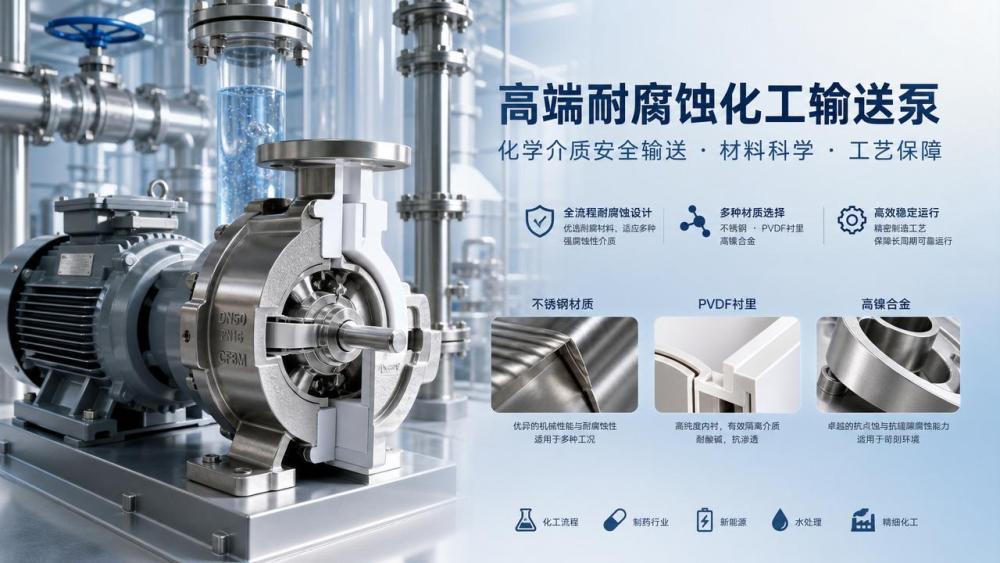
Corrosion damage is not always dramatic at first. It often starts as surface attack, pitting, seal degradation, or hidden thinning around the casing, impeller, shaft sleeve, and fasteners.
In chemical transfer lines, these small failures can lead to contamination, unplanned shutdowns, and expensive secondary issues. Seal support systems, valves, and downstream filtration equipment may also be affected.
This is where the wider FCSM perspective becomes useful. Pumps do not operate alone. They sit inside connected fluid systems shaped by cavitation risk, control valve behavior, filtration performance, energy demand, and maintenance strategy.
For that reason, selecting corrosion resistant pumps is increasingly tied to broader plant goals, including low leakage, digital monitoring, decarbonization, and long service intervals.
What corrosion resistant pumps really mean in practice
The term does not describe one pump type. It refers to pumps designed with materials and sealing arrangements that can withstand aggressive media without unacceptable loss of strength, cleanliness, or hydraulic performance.
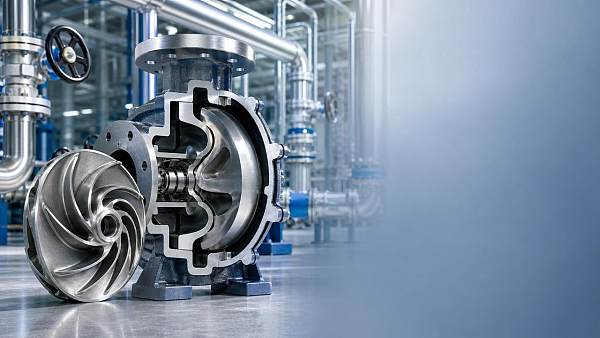
In practice, the pump body material gets most attention, but corrosion resistance depends on the full wetted assembly. That includes the impeller, casing, shaft, seals, elastomers, linings, and sometimes even instrumentation connections.
A stainless casing paired with the wrong elastomer can still fail. A high-alloy impeller can still erode quickly if solids and cavitation are ignored. Material choice works only when it is tied to the real duty condition.
Best material options for corrosive chemical transfer
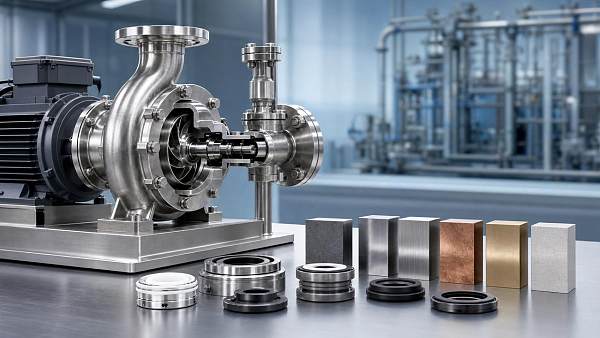
No single material is best for every chemical. The useful comparison is between resistance profile, mechanical strength, temperature range, fabrication cost, and maintainability.
Stainless steel
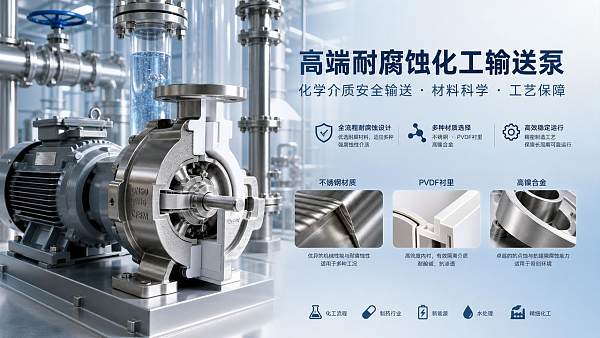
304 and 316 stainless steel are common entry points for corrosion resistant pumps. They perform well in many mild to moderate services and offer good mechanical durability.
316 usually outperforms 304 in chloride-bearing environments, but neither is a universal answer. Strong acids, concentrated chlorides, or reducing chemicals can still cause rapid attack.
Duplex and super duplex stainless steel
These alloys are often selected when chloride stress, seawater exposure, or pitting resistance becomes more demanding. They combine strong corrosion performance with higher mechanical strength.
They are often considered in desalination, offshore systems, brine handling, and aggressive water chemistry where standard stainless grades may fall short.
High-nickel alloys
Alloys such as Hastelloy and Inconel are used when chemical severity exceeds the safe range of stainless steel. They are valuable for hot acids, mixed chemical streams, and strongly oxidizing or reducing conditions.
Their cost is significantly higher, so they are typically justified where failure risk, contamination cost, or shutdown impact is also high.
Non-metallic thermoplastics
PP, PVDF, PTFE-lined components, and similar polymers are widely used in corrosion resistant pumps for acids, alkalis, and clean chemical transfer at moderate temperatures.
Their strength is chemical resistance and purity. Their limitation is structural performance under higher temperature, pressure, vacuum, or mechanical shock.
Fluoropolymer linings and composite constructions
Lined pumps combine the structural support of metal with the chemical resistance of fluoropolymers. This can be a balanced solution where all-metal exotic alloys are too costly.
The quality of the lining, bonding method, and service temperature limits matter as much as the base design.
Matching materials to actual service conditions
The chemical name alone is not enough. Concentration, trace contaminants, temperature swings, and cleaning cycles can change compatibility dramatically.
Sulfuric acid is a good example. One concentration range may suit one alloy, while another concentration or elevated temperature may require a very different material.
The same caution applies to sodium hypochlorite, hydrochloric acid, caustics, solvents, and slurry chemicals. Corrosion resistant pumps should be selected against the full process envelope, not the nominal fluid description.
Key selection questions
- What is the exact chemical composition, including impurities?
- What are normal and upset temperatures?
- Does the pump handle solids, crystals, or abrasive fines?
- Will the unit run continuously, intermittently, or dry for short periods?
- How critical are leakage control and product purity?
- What flushing, CIP, or sterilization chemicals will also contact wetted parts?
Where the biggest mistakes usually happen
One common mistake is choosing by initial cost only. A cheaper metallic pump may look competitive until seal failures, spare consumption, and process interruptions are included.
Another mistake is focusing only on corrosion tables. Static compatibility charts are useful, but they do not capture velocity effects, cavitation, flashing, solids loading, or local dead zones.
This is especially relevant in centrifugal systems. FCSM’s broader industry lens highlights how impeller hydraulics and cavitation behavior can accelerate damage even when the base material appears acceptable.
There is also a system-level issue. A pump may resist corrosion while adjacent valves, gaskets, or filtration units do not. That creates weak links and unstable maintenance intervals.
Material choice by application pattern
Different services tend to favor different material strategies. The practical goal is not to find the most advanced material. It is to find the most reliable material for the duty.
Clean acid and alkali transfer
Non-metallic and lined corrosion resistant pumps often perform well here, especially where purity and broad chemical resistance matter more than extreme pressure capability.
Chloride-rich process water and brine
Duplex, super duplex, or selected high-alloy materials are more common. Pitting and crevice resistance become central concerns, not secondary details.
Hot aggressive chemicals
High-nickel alloys or carefully engineered lined designs are often required. Temperature pushes many otherwise acceptable materials outside their safe operating window.
Wastewater, slurries, and mixed streams
Here, corrosion and abrasion interact. Material selection should consider hardness, erosion resistance, and passage design, not corrosion resistance alone.
A practical evaluation framework
For chemical transfer projects, the most reliable decisions usually come from a short but disciplined review process.
- Define the full fluid envelope, including cleaning and upset conditions.
- Compare wetted materials, not just casing materials.
- Review seal type, elastomer compatibility, and leakage expectations.
- Check velocity, NPSH margin, and cavitation exposure.
- Estimate lifecycle cost using downtime and spare intervals.
- Align the pump with adjacent valves, filters, and instrumentation materials.
This approach supports more stable handover, fewer change orders, and clearer vendor evaluation. It also fits the wider industrial trend toward predictive maintenance and performance visibility across fluid systems.
What to review before the final decision
Before locking in corrosion resistant pumps, it helps to request detailed material breakdowns, corrosion data assumptions, seal arrangement notes, and references from similar media service.
It is also worth checking whether the design supports future process changes. A small shift in concentration, temperature, or operating hours can alter the best material choice.
The strongest decisions usually come from combining process data, material science, and hydraulic understanding. That is exactly where strategic machinery intelligence adds value, especially in complex facilities where pumps, valves, filtration, and energy targets are closely linked.
The next step is straightforward: build a shortlist based on actual media conditions, compare total ownership risk rather than purchase price alone, and validate the selected material set against the whole transfer system.
Related News
 Pump Impeller Technology: Key Design Factors Behind Efficiency and Wear LifeFluid Dynamics ScientistPump impeller technology explained: discover the key design factors that improve hydraulic efficiency, reduce cavitation and wear, and help lower maintenance costs in modern pump systems.
 How Fluid Dynamics Research Improves Pump EfficiencyFluid Dynamics ScientistFluid dynamics research reveals how cavitation, turbulence, and system losses affect pump efficiency, helping buyers cut energy costs, improve reliability, and make smarter equipment decisions.
 Corrosion Resistant Pumps: Best Material Choices for Chemical TransferFluid Dynamics ScientistCorrosion resistant pumps: discover the best material choices for chemical transfer, from stainless steel to PVDF and high-nickel alloys, to reduce failures and improve uptime.
 Industrial Pumps vs Corrosion Risks: What to Check Before OrderingFluid Dynamics ScientistIndustrial pumps face hidden corrosion risks that can raise downtime, leaks, and lifecycle costs. Learn what to check before ordering for longer service life and smarter buying decisions.
![]() Pump Systems for Chemical Plants: Design Priorities for Stable OperationFluid Dynamics ScientistPump systems for chemical plants demand more than pump selection. Discover design priorities for stable operation, safer chemical handling, lower downtime, and better lifecycle performance.
Pump Systems for Chemical Plants: Design Priorities for Stable OperationFluid Dynamics ScientistPump systems for chemical plants demand more than pump selection. Discover design priorities for stable operation, safer chemical handling, lower downtime, and better lifecycle performance.![]() Pump Cavitation Solution: Causes, Fixes, and Prevention StepsFluid Dynamics ScientistPump cavitation solution guide: learn the real causes, quick fixes, and prevention steps to reduce damage, downtime, and maintenance cost fast.
Pump Cavitation Solution: Causes, Fixes, and Prevention StepsFluid Dynamics ScientistPump cavitation solution guide: learn the real causes, quick fixes, and prevention steps to reduce damage, downtime, and maintenance cost fast. 2026 Fluid Separation Innovation Trends in Chemical Process PumpsFluid Dynamics ScientistFluid separation innovation is reshaping chemical process pumps in 2026 with smarter monitoring, modular membranes, and energy-saving designs. Discover the trends driving uptime, purity, and lower operating costs.
 Pakistan requires forced-labor-free proof for importsFluid Dynamics ScientistPakistan requires forced-labor-free proof for imports. Learn how this customs rule affects clearance, exporters, audits, and shipment readiness for Pakistan-bound goods.
![]() Fluid Dynamics Research Methods Used in Pump DesignFluid Dynamics ScientistFluid dynamics research methods drive smarter pump design by improving efficiency, cavitation control, and reliability. Explore key tools, tests, and insights for better industrial decisions.
Fluid Dynamics Research Methods Used in Pump DesignFluid Dynamics ScientistFluid dynamics research methods drive smarter pump design by improving efficiency, cavitation control, and reliability. Explore key tools, tests, and insights for better industrial decisions.![]() Pakistan Tightens Import Rules on Forced Labor ProofFluid Dynamics ScientistPakistan tightens import rules with forced labor proof now required for customs clearance. Learn how this impacts pumps, valves, compressors, and exporters shipping to Pakistan.
Pakistan Tightens Import Rules on Forced Labor ProofFluid Dynamics ScientistPakistan tightens import rules with forced labor proof now required for customs clearance. Learn how this impacts pumps, valves, compressors, and exporters shipping to Pakistan. Chile Trials LCA Rules for Imported Process PumpsFluid Dynamics ScientistChile LCA rules for imported process pumps start June 1, 2026. Learn how API 610 and ANSI B73 pump importers can prepare CNCR-linked compliance.
 Fluid Dynamics Research Methods for Pump PerformanceFluid Dynamics ScientistFluid dynamics research methods help evaluate pump efficiency, cavitation, CFD accuracy, and real operating risks for smarter selection and reliable performance.