Pump Impeller Technology: Key Design Factors Behind Efficiency and Wear Life




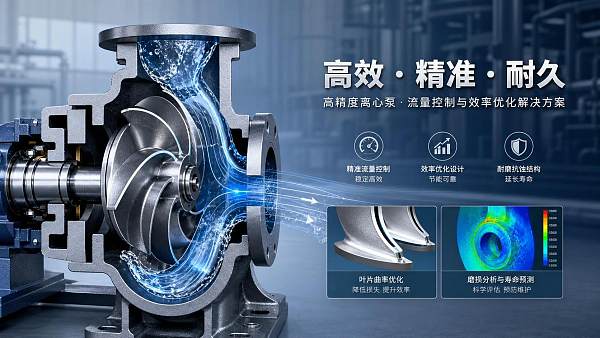
Pump impeller technology sits at the center of pump performance. It determines how smoothly liquid enters, accelerates, and leaves the rotating passage, which directly affects energy consumption, vibration, and wear.
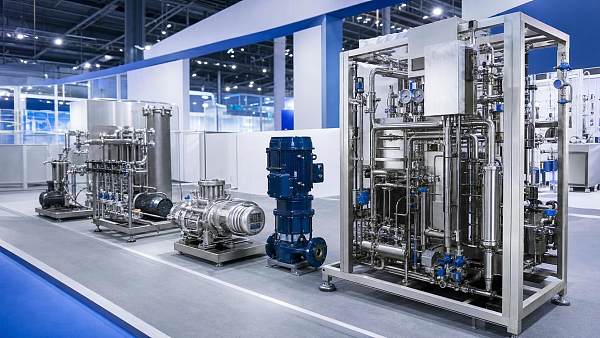
That matters far beyond the pump itself. In chemical lines, water systems, filtration loops, and utility services, the impeller influences process stability, maintenance frequency, and the total cost of moving fluid.
Across the broader machinery landscape followed by FCSM, efficiency is no longer judged only by rated flow. It is tied to decarbonization targets, predictive maintenance, material durability, and the ability to keep equipment reliable under changing duty conditions.
Seen from that practical angle, pump impeller technology is not an abstract design topic. It is a daily operating factor that shapes wear life, cavitation risk, and hydraulic efficiency in modern pump systems.
Why impeller design deserves closer attention
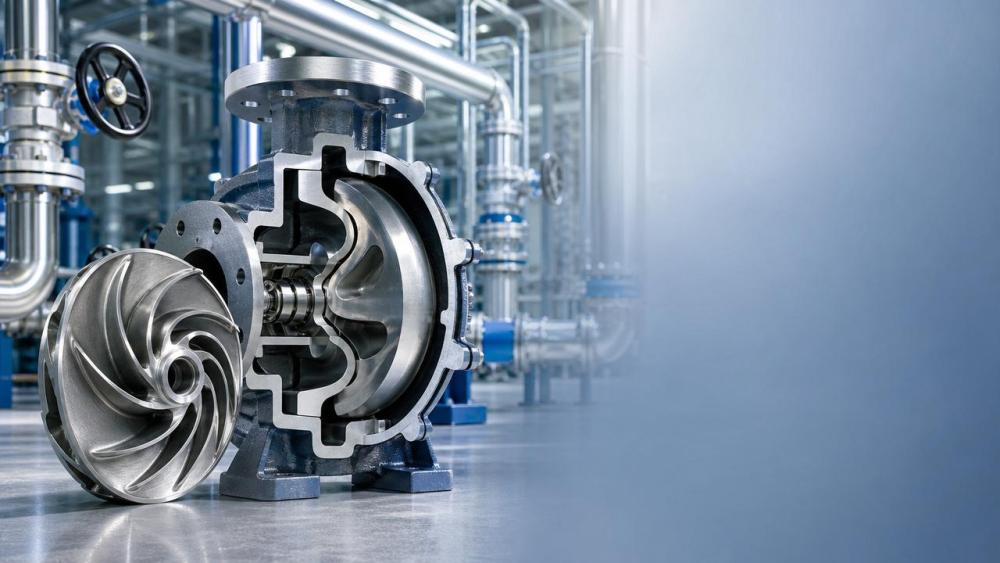
A pump can have a strong motor, a sound casing, and proper controls, yet still perform poorly if the impeller is mismatched to the service. The impeller is where hydraulic intent becomes real fluid movement.
In many installations, the first visible symptoms of poor matching are subtle. Power draw rises, noise increases, seals run hotter, and wear parts need replacement earlier than expected.
More importantly, today’s operating environments are less forgiving. Variable demand, stricter energy rules, and more challenging media make impeller selection and design a front-line reliability issue.
For this reason, pump impeller technology is increasingly discussed alongside smart valves, compressor efficiency, and filtration performance. All are connected by the same industrial goal: stable flow with less wasted energy.
The core of pump impeller technology
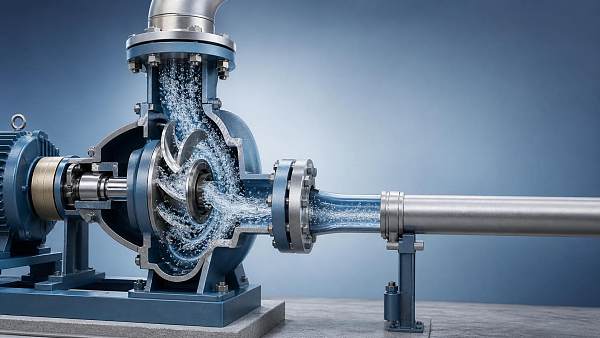
At its simplest, an impeller transfers mechanical energy from the shaft into the fluid. The way it does this depends on blade shape, vane count, outlet angle, passage width, and surface finish.
Small geometric changes can produce very different hydraulic behavior. One design may favor high efficiency near the best efficiency point. Another may sacrifice some efficiency to improve solids handling or reduce clogging.
This is why pump impeller technology must be understood in context. A high-efficiency impeller on paper is not automatically the best choice for abrasive slurry, fluctuating suction conditions, or corrosive process liquids.
In practical terms, the right design balances three things at once: hydraulic performance, mechanical integrity, and resistance to the actual fluid environment.
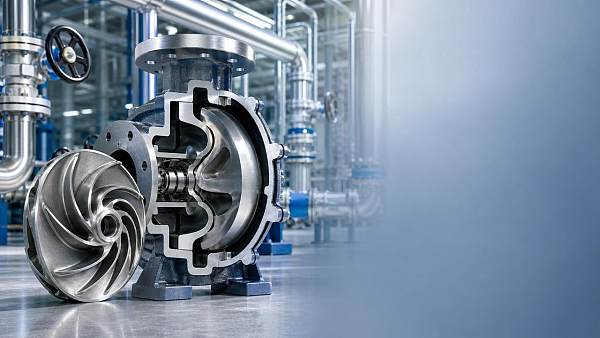
Open, semi-open, and closed impellers
Different impeller forms solve different problems. The basic categories remain useful because they reflect how a pump handles efficiency, solids, and wear.
The selection is rarely about a single best type. It is about how the duty point, fluid quality, and maintenance tolerance fit the impeller’s operating behavior.
Design factors that drive efficiency
Efficiency losses usually begin inside the flow path. Recirculation, separation, shock loss at inlet, and turbulence at outlet all reduce the useful energy transferred to the liquid.
Blade inlet geometry is especially important. If the inlet angle does not match the incoming flow, fluid strikes the vane unevenly. That creates local eddies, noise, and lower suction performance.
Blade number also matters. Too few vanes can reduce guidance and increase slip. Too many can narrow the flow passages and add friction loss, especially with contaminated liquids.
Surface condition is another overlooked factor. Rough passages increase drag and encourage deposit buildup. Over time, even a well-designed impeller loses efficiency if corrosion or erosion changes the original hydraulic profile.
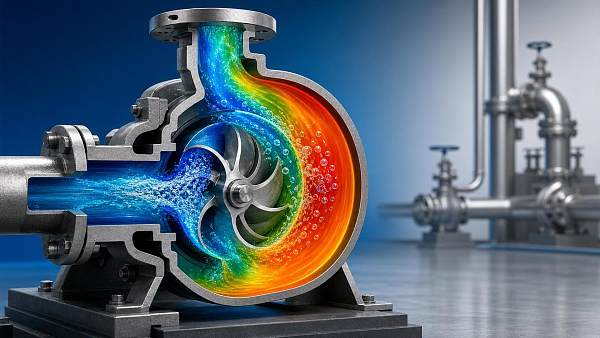
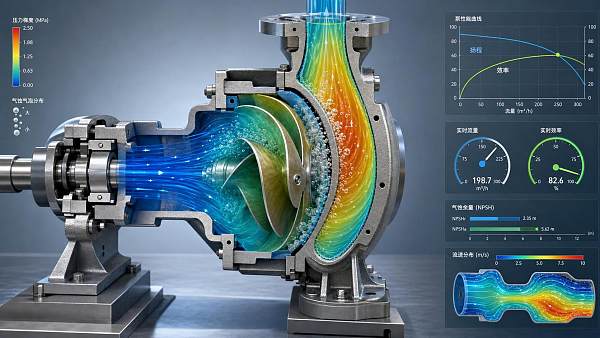
In advanced pump impeller technology, CFD is often used to refine these details. FCSM tracks this trend closely because simulation now helps predict cavitation zones, pressure distribution, and off-design behavior before hardware enters service.
Hydraulic balance and axial thrust
Efficiency is not only about the fluid path. Poor hydraulic balance raises axial thrust, which increases bearing load and shortens rotating assembly life.
Back vanes, balance holes, and wear ring design can help control internal forces. The trade-off is that each balancing method may introduce leakage or secondary loss.
That trade-off should be judged carefully. A small drop in peak efficiency may be acceptable if it produces a more stable shaft line and longer service intervals.
What determines wear life in real service
Wear life is shaped by more than hardness alone. The fluid may contain sand, crystals, gas bubbles, chlorides, fibers, or chemical agents that attack the impeller in different ways.
Abrasive wear removes material through particle impact. Corrosive wear changes the metal surface chemically. Cavitation damage pits the blade where vapor bubbles collapse near high-pressure regions.
When these mechanisms combine, deterioration accelerates. A corroded surface becomes rougher, then more vulnerable to hydraulic loss and particle erosion. The pump starts to consume more energy while delivering less useful flow.
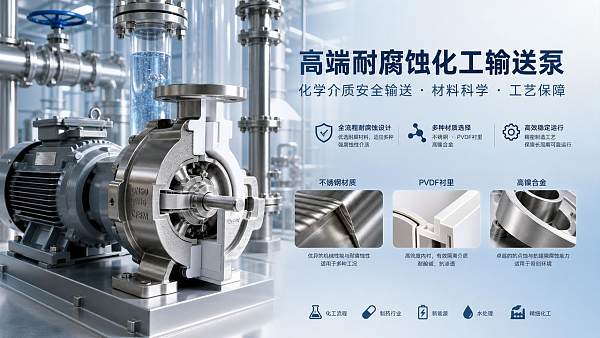
This is why pump impeller technology must consider material science alongside hydraulics. Stainless steel, duplex alloys, high-chrome iron, bronze, engineered coatings, and composites all fit different duty profiles.
Material choice should match the liquid, not the label
A premium alloy is not always the smartest answer. In some services, a lower-cost material with the correct coating or replaceable wear strategy delivers better lifecycle economics.
- Clean water systems often prioritize hydraulic finish and corrosion resistance.
- Wastewater duty may favor clog resistance and tolerance to fibrous matter.
- Slurry handling usually requires erosion resistance and manageable replacement cost.
- Chemical processing needs compatibility with temperature, pH, and contaminant content.
The better approach is to compare failure mode, run hours, fluid chemistry, and maintenance access before deciding what “wear-resistant” really means in that setting.
Where operating conditions change the outcome
Even strong pump impeller technology can underperform when the system runs far from its intended duty point. Oversizing, throttling, low-flow operation, and unstable suction all change internal flow behavior.
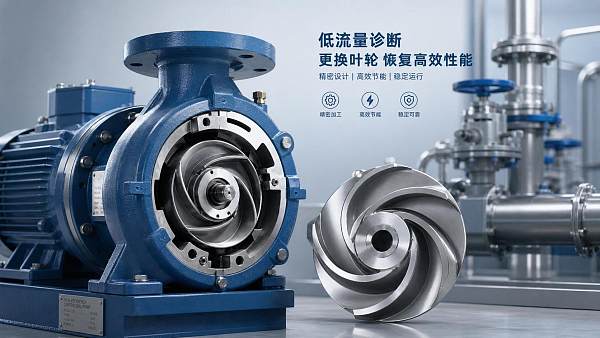
Low-flow recirculation is a common example. The pump still runs, but internal vortices intensify, temperature rises, and localized blade loading increases. The damage appears gradually, then suddenly becomes expensive.
Suction conditions deserve equal attention. If available NPSH is too close to the required value, the impeller may enter cavitating conditions during hot weather, tank drawdown, or transient demand peaks.
This has become more relevant in energy-conscious plants. Variable frequency drives, digital controls, and tighter process targets improve flexibility, but they also expose pumps to broader operating envelopes.
For that reason, evaluating pump impeller technology now means looking beyond nameplate duty. The real question is how the impeller behaves across the full operating window.
Practical checks that improve day-to-day results
A few disciplined checks often reveal whether the impeller is supporting or undermining system performance. These checks are useful during selection, commissioning, and routine troubleshooting.
These observations gain more value when combined with vibration trends, power data, and inspection history. That is where digital monitoring aligns well with the reliability goals highlighted across FCSM’s machinery coverage.
A better way to evaluate the next impeller decision
When comparing pump designs, it helps to move past catalog efficiency alone. The more useful comparison includes off-design stability, expected wear pattern, material fit, and service accessibility.
Ask whether the current problems come from the impeller itself or from the operating context around it. A redesign may help, but so might better suction conditions, corrected speed control, or tighter solids management.
That broader view is exactly why pump impeller technology remains a live topic in general industry. It connects fluid dynamics, maintenance planning, energy efficiency, and equipment lifespan in one component.
The next useful step is to review actual duty data, inspect wear patterns, and compare them against the intended hydraulic design. That creates a clearer basis for choosing repair, upgrade, or replacement with fewer assumptions.
Related News
 Pump Impeller Technology: How Design Changes Affect Flow and WearFluid Dynamics ScientistPump impeller technology shapes flow, efficiency, cavitation, and wear. Discover how design and material changes improve pump reliability, lifecycle cost, and process performance.
 Thailand 2026 Show Signals New Pump Buying PrioritiesFluid Dynamics ScientistThailand 2026 Show signals new pump buying priorities as demand rises for high-pressure wash pumps and chemical process pumps. See what buyers now value beyond price.
 Pump CFD Simulation for Cavitation Risk and Efficiency GainsFluid Dynamics ScientistPump CFD simulation helps uncover cavitation risk, pressure loss, and hidden efficiency gains before fabrication, enabling smarter pump design decisions and lower lifecycle costs.
 When Pump Impeller Replacement Solves Low Flow ProblemsFluid Dynamics ScientistPump impeller replacement can quickly restore low flow when wear, corrosion, or cavitation—not the full pump—is the real issue. Learn the key signs before your next outage.
 Pump System Supplier Checklist for Cost, Support, and Delivery RiskFluid Dynamics ScientistPump system supplier checklist for buyers: compare total cost, technical support, and delivery risk to avoid hidden losses, improve uptime, and choose with confidence.
 Pump Cavitation Analysis: Signs, Causes, and Fast FixesFluid Dynamics ScientistPump cavitation analysis made practical: spot early signs, uncover root causes, and apply fast fixes to reduce downtime, protect parts, and restore stable pump performance.
 How to Choose Industrial Pumps for Water Treatment SystemsFluid Dynamics ScientistIndustrial pumps for water treatment: learn how to match pump type, materials, flow, and controls to each duty, reduce lifecycle costs, and improve system reliability.
 China Vacuum Pump Exports Rise, Prices Stay Under PressureFluid Dynamics ScientistChina vacuum pump exports rise 20.7%, but falling unit prices reveal pressure on value growth. Explore what this means for sourcing, compliance, and higher-spec export opportunities.
 Pump CFD Simulation for Flow, Cavitation, and EfficiencyFluid Dynamics ScientistPump CFD simulation reveals flow behavior, cavitation risk, and efficiency tradeoffs before costly changes. Learn how to improve reliability, cut energy loss, and make smarter pump decisions.
 Pump Impeller Technology: Key Design Factors Behind Efficiency and Wear LifeFluid Dynamics ScientistPump impeller technology explained: discover the key design factors that improve hydraulic efficiency, reduce cavitation and wear, and help lower maintenance costs in modern pump systems.
 How Fluid Dynamics Research Improves Pump EfficiencyFluid Dynamics ScientistFluid dynamics research reveals how cavitation, turbulence, and system losses affect pump efficiency, helping buyers cut energy costs, improve reliability, and make smarter equipment decisions.
 Corrosion Resistant Pumps: Best Material Choices for Chemical TransferFluid Dynamics ScientistCorrosion resistant pumps: discover the best material choices for chemical transfer, from stainless steel to PVDF and high-nickel alloys, to reduce failures and improve uptime.