K-REACH Revision Tightens Coating Chemical Registration




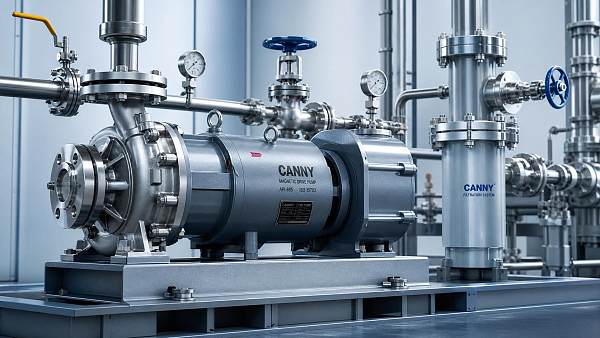
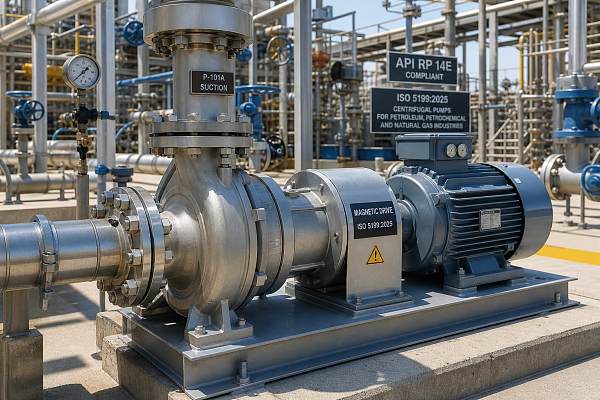
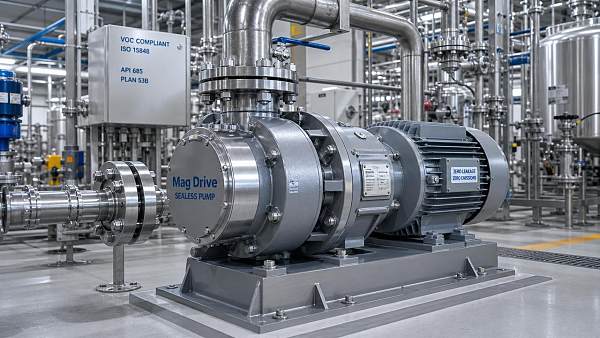
On May 6, 2026, South Korea issued Presidential Decree No. 36304 to revise the enforcement rules of K-REACH, bringing new compliance pressure to corrosion-resistant and wear-resistant coating chemicals used in chemical process pumps, including magnetic drive pumps, diaphragm valves, and the inner walls of pressure vessels. The immediate issue for exporters and equipment supply chains is not only the September 30, 2026 pre-registration deadline for new chemical substances in these coatings, but also the trade consequence that from 2027, complete equipment containing non-compliant coatings will be barred from import into Korea.
What the amendment now requires
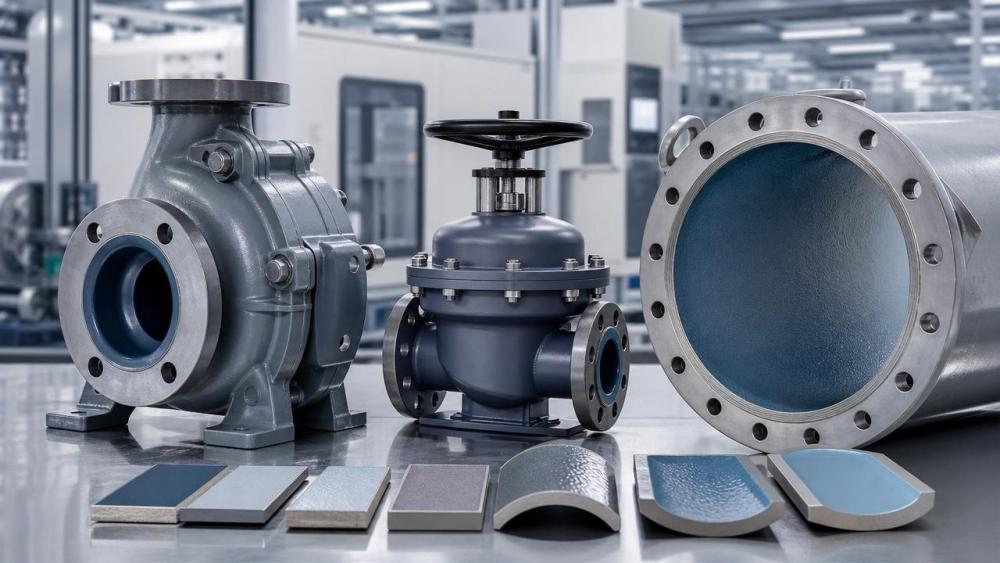
According to the provided information, the K-REACH enforcement decree was revised through South Korea's Presidential Decree No. 36304 on May 6, 2026. The revision covers new chemical substances contained in anti-corrosion or wear-resistant coatings used on chemical process pumps, including magnetic drive pumps, diaphragm valves, and the internal lining of pressure vessels.
The stated requirement is that these new chemical substances must complete pre-registration by September 30, 2026. If that does not happen, South Korea will prohibit the import of complete equipment containing such coatings starting in 2027.
The provided summary also indicates that Chinese exporters are facing pressure related to upgraded technical documentation and coordination for joint registration.
Where the impact is likely to appear first
Equipment exporters shipping coated units to Korea
From an industry perspective, exporters of pumps, valves, and pressure-related equipment may be among the first to feel the effect because the restriction is tied to the importability of complete machines, not only to the coating material itself. This means product compliance review may need to move upstream into coating formulas, substance identification, and registration status checks before shipment decisions are made.
Coating and materials suppliers behind the equipment bill of materials
Analysis shows that coating suppliers and material partners may come under closer scrutiny because the regulatory trigger concerns new chemical substances contained in anti-corrosion and wear-resistant coatings. Their role becomes important in supporting technical documentation, substance disclosure, and any registration-related coordination needed by equipment manufacturers or exporters.
Manufacturers managing cross-border product documentation
For manufacturing companies, the impact may concentrate in technical files, compliance documentation, and internal product mapping. Equipment makers that previously treated coatings as a secondary component may need to examine whether specific coated parts destined for Korea fall within the amended scope and whether supporting documents are sufficient for customer or customs-side review.
Buyers, distributors, and project-side procurement teams
Korean buyers, distributors, and project procurement functions may also need to pay closer attention to coating-related declarations in sourced equipment. Observably, the issue is not limited to a chemical transaction; it can affect ordering decisions, supplier qualification, and delivery planning where imported finished equipment is involved.
Practical points companies should review now
Check which exported product lines use covered coatings
What deserves closer attention is whether coatings used on chemical process pumps, magnetic drive pumps, diaphragm valves, and pressure vessel inner walls contain new chemical substances covered by the amendment. The key practical step is product-by-product mapping rather than assuming all coated equipment faces the same exposure.
Prepare for deeper technical file requirements
Analysis shows that documentation may become a central operational issue. The summary explicitly points to pressure on Chinese exporters to upgrade technical documents, which suggests that material descriptions, coating-related records, and compliance support documents may require closer review before export transactions proceed smoothly.
Watch the coordination burden around joint registration
The provided information specifically mentions pressure linked to joint registration collaboration. For companies that depend on multiple suppliers or contract manufacturing arrangements, this may create a coordination challenge across the supply chain, especially where the equipment exporter is not the original developer of the coating chemistry.
Separate policy text from shipment planning
From a business execution perspective, companies should distinguish between the legal trigger and actual shipment risk. The confirmed fact is the pre-registration deadline of September 30, 2026 and the 2027 import ban for complete equipment containing the relevant coatings if pre-registration is not completed. In practice, businesses may need to align customer communication, order acceptance, and delivery scheduling with those dates.
Why this should be read as more than a narrow chemical rule
Observably, this is not just a chemical compliance update in isolation. It connects substance-level regulatory control with market access for finished industrial equipment. That makes the amendment relevant not only to compliance teams, but also to export sales, sourcing, product engineering, and contract fulfillment functions.
It is more appropriate to understand this as a near-term compliance change with a longer-term signal for industrial equipment trade. The near-term issue is clear: affected substances in relevant coatings must be pre-registered by the stated deadline. The longer-term signal is that embedded chemical content in equipment components is receiving closer regulatory attention, which may increasingly affect cross-border equipment sales where coatings, linings, or surface treatments are involved.
At the same time, this remains a development that still requires continued observation. Based on the provided information alone, the exact implementation detail at transaction level, customer verification practice, and supporting documentation expectations are not fully described here.
What this means for the market right now
At this stage, the amendment should be read as a concrete compliance requirement with direct implications for Korea-bound industrial equipment containing certain coatings. For affected companies, the main significance lies in the shortened preparation window between the May 6, 2026 revision and the September 30, 2026 pre-registration deadline, followed by the 2027 import restriction for non-compliant complete equipment.
A neutral reading is that this is neither a routine paperwork update nor a basis for broad market conclusions. It is a specific regulatory development that could materially affect product eligibility for import into Korea where coating chemistry falls within scope. For industry participants, the most reasonable approach is early verification of affected products, documents, and supply-chain coordination points.
Basis of this article and points to keep verifying
This article is based on the user-provided news title, event date, and summary information concerning the May 6, 2026 K-REACH enforcement decree revision in South Korea. For this type of development, commonly relevant source categories may include official government notices, company disclosures, industry association updates, authoritative media reporting, and standard or regulatory documents.
A specific official source link was not provided in the input, so the exact official publication path still needs to be continuously verified. Follow-up attention should focus on any further official wording, implementation clarification, and practical compliance expectations affecting coated pumps, valves, pressure vessels, and related exports to the Korean market.
Related News
 EU Extends Food Contact Rules to Pump Seal PartsFluid Dynamics ScientistEU food contact rules now cover pump seal parts. Learn how Regulation (EU) 2026/1382 affects FKM/FFKM magnetic drive pumps, EN 13130-1 testing, EU exports, and compliance planning.
 Aramco Sets Magnetic Drive Pump Rule for New RefineriesFluid Dynamics ScientistAramco Sets Magnetic Drive Pump Rule for New Refineries: learn how the SAES-H-100 update reshapes refinery procurement, supplier qualification, and API 685 compliance from October 2026.
 When to Specify Corrosion Resistant Pumps API 685Fluid Dynamics ScientistCorrosion resistant pumps API 685 become essential when leakage risk, hazardous fluids, and lifecycle costs outweigh standard sealed options. Learn when to specify them with confidence.
 Singapore Fast-Tracks Magnetic Drive Pump ApprovalFluid Dynamics ScientistSingapore fast-tracks magnetic drive pump approval under the NEA GreenTech Scheme, speeding ASEAN and Middle East exports with customs priority and 15% grant support.
 Aramco Tightens Magnetic Drive Pump Vendor RulesFluid Dynamics ScientistAramco Tightens Magnetic Drive Pump Vendor Rules: learn how API RP 14E and ISO 5199:2025 compliance now affects Q4 2026 tender access, GCC distributors, and EPC bidding readiness.
 Nickel Spike Lifts Magnetic Drive Pump CostsFluid Dynamics ScientistNickel Spike Lifts Magnetic Drive Pump Costs as nickel volatility drives 8–10% higher new-order prices and 16–18 week lead times. See how buyers and suppliers should respond now.
 India Tightens Battery Checks for Pump ImportsFluid Dynamics ScientistIndia Tightens Battery Checks for Pump Imports: learn how BIS battery capacity verification, QR traceability, and longer customs timelines will impact pump shipments, compliance, and delivery planning.
 HANNOVER MESSE 2027 Tightens Green Entry for Chinese Magnetic Drive Pump ExhibitorsFluid Dynamics ScientistHANNOVER MESSE 2027 updates rules for Chinese magnetic drive pump exhibitors: ISO 14067 carbon footprint and green factory proof now decide entry. Learn the deadline, risks, and buyer impact.
 Hannover Messe 2027 Sets Green Filing DeadlineFluid Dynamics ScientistHannover Messe 2027 sets a June 30 green filing deadline for Chinese magnetic drive pump exhibitors. Learn the TÜV SÜD, ISO 14067, RoHS3 and recycled content rules before booth eligibility is at risk.
 Hannover Messe 2027 Pre-Sales Open With Focus on Magnetic Drive PumpsFluid Dynamics ScientistHannover Messe 2027 pre-sales open with Magnetic Drive Pumps in focus. Learn about API 685:2024 advantages, booth subsidies, buyer matching priority, and the August 31, 2026 deadline.
![]() EU Tightens Screening for Key Fluid EquipmentFluid Dynamics ScientistEU Tightens Screening for Key Fluid Equipment: learn how new EU FDI rules affect magnetic drive pumps, SWRO high-pressure pumps, and chemical process pumps, with compliance and delivery impacts.
EU Tightens Screening for Key Fluid EquipmentFluid Dynamics ScientistEU Tightens Screening for Key Fluid Equipment: learn how new EU FDI rules affect magnetic drive pumps, SWRO high-pressure pumps, and chemical process pumps, with compliance and delivery impacts. EPA VOC Rule Drives Shift to Sealless Magnetic PumpsFluid Dynamics ScientistEPA VOC rule is accelerating demand for sealless magnetic pumps. Learn how zero-leakage compliance, certification, and procurement shifts will impact chemical and pharmaceutical projects.